


Converting a House into Flats in London: A Step-by-Step Guide
For homeowners and investors, converting a London house into multiple self-contained flats is an exciting opportunity. However, it demands a precise, lawful approach. This guide walks you through every stage, from planning permission to London space standards and Building Regulations, and from Party Wall duties to utilities separation and move logistics.
You’ll learn exactly what London councils expect and how to handle the practicalities without delays. Just remember subdivision almost always requires planning permission, and compliance with Building Regulations is non-negotiable.
 Last updated: 13 July 2026
 Read time: 14 min
Is Converting a House into Flats Right for Your Property? (Quick Feasibility)
To convert a house into flats, UK residents first need to explore whether it is the right move to make. A flat conversion transforms one dwelling into two or more self-contained units. These units each come with independent access, kitchens, bathrooms, and services. If you’re exploring the possibility of converting, you need to assess feasibility. Consider these aspects:
- Adequate layout depth/width
- Clear escape routes
- Potential for separate entrances
- Compliant bin/bike storage
- Strong daylight/sunlight amenity space
This assessment needs to be done for each potential unit. London councils prioritise quality over increasing the number of units, so poor layouts rarely gain approval. If you’re exploring how to convert a house into flats in London, an early feasibility check is essential.
Do You Need Planning Permission in London?
Yes. Make no mistake, you almost always require full planning permission to convert houses into flats. Subdivision counts as a change of use, so you’ll need a full London planning application complete with drawings, a Design & Access Statement, and justification that the proposal meets local and London Plan policies. Extra consents could apply in conservation areas, listed buildings, and locations with an Article 4 Direction restricting conversions.
Applications tend to include existing and proposed plans, elevations, heritage assessments (where necessary), and parking/transport statements. The Planning Portal confirms permission is required for subdivision. Thorough preparation reduces refusal risk.
For external guidance, visit the Planning Portal for more information.
London Policy & Space Standards You Must Hit (What Councils Look for)
London boroughs apply strict quality rules based on the London Plan space standards and the Nationally Described Space Standard (NDSS). These set key criteria: minimum flat sizes in London, storage volumes, bedroom sizes, and Goss Internal Areas (GIAs). Councils also assess whether layouts avoid poor-quality features. These features range from long internal corridors to cramped studios. Another is excessive single aspect limits, especially north-facing ones.
That’s not all. You must demonstrate good daylight and ventilation levels. Additionally, you require appropriate private amenity where feasible (gardens, balconies, shared outdoor space, etc.), as well as compliance with London’s strict cycle/refuse provision standards. Noise mitigation between units is another major focus.
Whether you are creating two flats or four, the council will expect each to function as a high-quality, long-term home. They’re not just there to meet the bare minimum.
Building Regulations for Conversions (Safety, Sound, Access)
Regardless of planning status, Building Regulations flat conversion compliance is mandatory. That includes securing Approved Documents B/E/M.
- Document B: This document outlines fire safety requirements, including protected escape routes, compartmentation, FD30 fire doors, smoke alarms, and detection systems. With fire safety for flat conversions, structural stability (Approved Document A), ventilation rates (F), sanitation (G), and electrical safety all apply.
- Document E: Document E governs acoustic performance. This means floors, ceilings, and walls are usually required to meet airborne and impact sound targets.
- Document M: Accessibility can also influence entrance design and circulation within the building. Means of escape, with clear, unobstructed routes, is essential.
Most conversions utilise the Full Plans route, allowing the council or an approved inspector to review drawings before work begins. Expect staged inspections at fire protection, sound insulation, drainage, and final completion phases.
Party Wall etc. Act 1996: When You Must Notify Neighbours
Flat conversions usually trigger the Party Wall etc. Act 1996. This is because conversions tend to involve at least one of the following: structural alterations, steel installation, loft work, and excavations within 3/6 metres of neighbouring buildings. If triggered, you must serve adjoining owners a Party Wall Notice. London residents have up to 14 days to consent, request changes, or appoint a surveyor.
If surveyors are involved, they will issue a legally binding award that sets out details such as working hours and protection measures. For Party Wall for flat conversions in London, serving early party wall notices prevents delays once contractors are ready to begin.
For homeowner guidance, you can learn more by reading the GOV.UK Party Wall etc Act 1996: Explanatory Booklet.
Step-by-Step: The Conversion Process (From Idea to Completion)
A typical flat conversion process in London follows a structured sequence. Here’s a breakdown of that sequence:
- Feasibility & measured survey: Assess layout potential, daylight, access, and services. Commission a measured survey from an architect to form accurate base drawings.
- Architect concept design: Your architect prepares concept layouts proving unit sizes meet NDSS. They also detail escape routes, comply with fire rules, and cycle/refuse storage can be integrated.
- Pre-application & full planning submission: Many developers seek a pre-application first. A full planning application will include drawings, a Design & Access Statement, supporting reports, and heritage analysis where relevant.
- Building Regulations package: Prepare the fire strategy, structural design, acoustic design, drainage, and mechanical/electrical layouts. Submit via the Full Plans route.
- Tendering & contractor appointment: Invite quotes and compare programmes before confirming your budget. Check that the contractor is aware of fire and acoustic requirements specific to conversions.
- Construction phase: Strip-out, structural work, compartmentation, risers/services, first fix, fire stopping and acoustic upgrades. Many different components make up the construction phase. This is followed by a second fix.
- Final inspections & completion certificate: Building Control signs off on each stage and issues the final completion certificate. This allows the flats to be occupied and legally sold or let.
These steps to convert a house into flats reflect the standard guidance found across London’s property sector and guarantee compliance without costly rework.

Designing Compliant Flats (Layouts That Work in London Homes)
Solid design is essential for planning approval. This is where following practical, effective design tips for flat conversions can make a big difference.
Start by prioritising stacking wet rooms (bathrooms/kitchens) to simplify drainage and reduce noise transmission. Centralise risers and ventilation routes to keep layouts efficient. Another tactic: where possible, aim for dual aspect units which supply better daylight and natural ventilation as this is a major plus for London planners.
That’s not all. Escape routes must remain clear and ensure corridor protection, with fire doors positioned correctly. Always avoid sub-standard single-aspect studios facing north, as councils often reject this setup. Integrate discreet bin/bike storage without harming kerb appeal or amenity. Furthermore, mitigate overlooking through thoughtful window placement for privacy/overlooking/daylight. If feasible, consider private outdoor space or shared gardens for a better quality of living.
When you achieve top flat layout London standards, you both comply and appeal to tenants.
Services & Utilities: Meters, Supplies, and Acoustic Control
Splitting services correctly is imperative in any London flat conversion. Each unit must have separate utilities for flat conversions. That means individual meter separation for electric, gas, and water. It also necessitates independent heating controls and clearly routed, regulation-compliant flues/vents. In older buildings, new sub-mains can be required because existing capacity is rarely sufficient.
Once services are divided, the next key element is controlling noise between properties. You must incorporate robust soundproofing in flats. London inspectors check for acoustic underlay, resilient bars, upgraded insulation, and detailing to reduce airborne/impact sound. Good acoustic performance protects neighbour amenity and avoids costly rework later down the line.
Legal & Admin After Works: Addresses, Leases & Council Tax
After construction finishes, you need to finalise a series of administrative steps. It’s far from exciting, admittedly, but it is necessary to make each flat legally recognisable. Start by setting up new flat addresses in London through the LLPG, followed by Royal Mail registration so mail can be properly delivered.
If your project involves leasehold creation, prepare compliant Land Registry plans, register new title splits, and check that all ownership structures reflect the conversion. You’ll also need to update council tax banding and open utility accounts for each separated service. Moreover, you must hand over O&M manuals and warranties.
These tasks streamline selling, renting, and insuring new homes with leases after conversion.
Budgeting: Typical Cost Drivers (and How Removals Fit in)
With knowledge of flat conversion costs, London developers can best manage their budget realistically. Major cost drivers include architectural design, structural engineering, and surveyor fees. These are closely followed by the likes of professional fees, including planning fees, building control fees, and the specialist works necessary to meet fire and acoustic regulations.
Service separation, such as running new electrics, water feeds, gas lines, etc., adds a substantial portion, especially in older and complex buildings. Kitchens, bathrooms, flooring, finishes, and final touches all complete the core spend. Because London properties vary so widely, a healthy contingency is strongly recommended.
One overlooked cost driver: logistics. Many homes require temporary move-outs during invasive works, and guaranteeing furniture is safely handled is essential. Professional London removals for renovations reduce the risk of damage and streamlines staged decants. Movers can also arrange temporary storage, which protects items during strip-outs and structural work.
Learn more with our Removals Cost Guide for London.

Construction Logistics: Protecting Neighbours & Your Programme
Effective renovation logistics in London can shave days off your programme and, not to be underestimated, keep neighbours on your side.
Begin with delivery management, where you pick slots for materials to arrive when access is clear. Communal areas protection with the likes of floor coverings and edge guards is another important step, especially in converted Victorian and mansion block corridors. Use licensed waste carriers with scheduled collections to avoid cluttered sites and possible complaints. Another point to remember: councils expect considerate construction, so manage noisy works within permitted hours and communicate key dates to neighbours.
Do you have furniture on-site? Here, professional movers play a key role. Decanting items and using furniture storage during renovations prevents damage from occurring. Their assistance becomes even more valuable during the final return phase. After snagging, trusted teams complete the move-in efficiently, protecting finishes and reducing delays linked to notoriously tight London access.
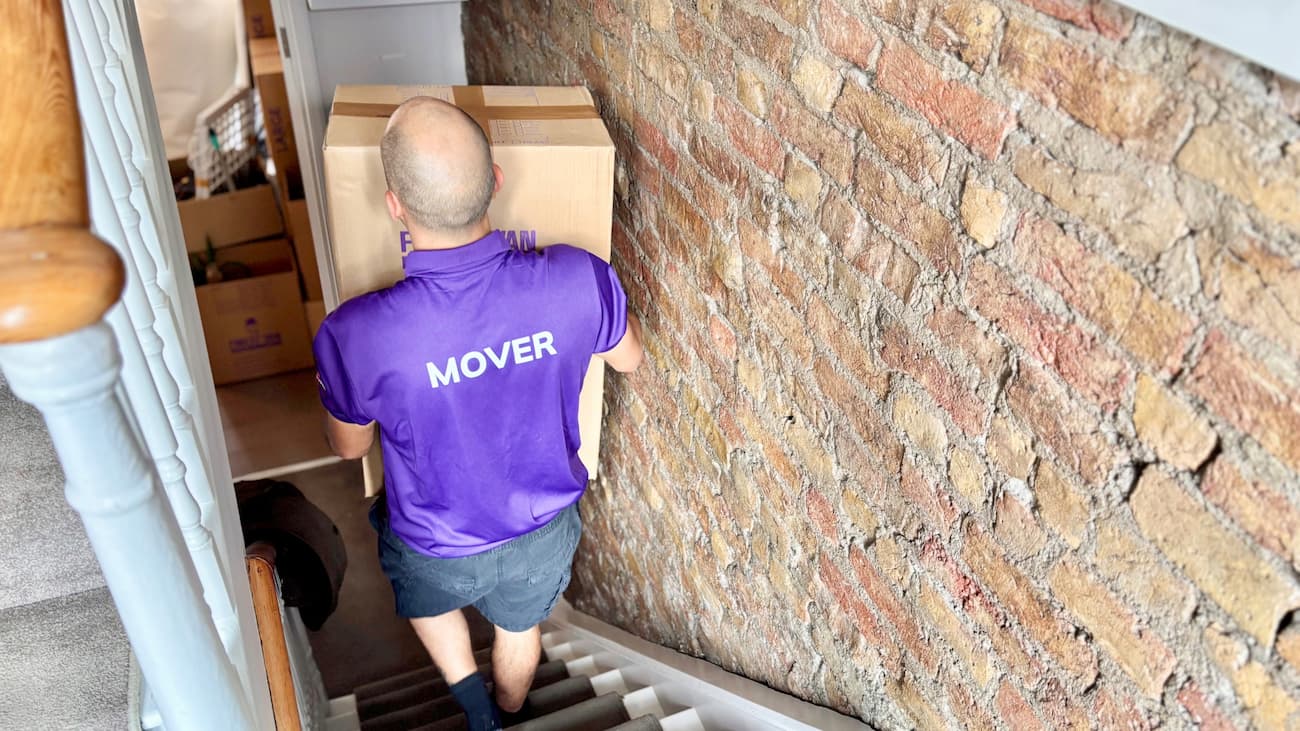
Do you need assistance with removals? Learn more about our reliable South London removal services.
Compliance checklist
Use this flat conversion checklist to keep your project compliant, from planning to completion certificate conversion sign-off stage:
- Planning decision notice
- Approved planning drawings
- Building Regulations Full Plan approval
- Fire strategy and compartmentation details
- Acoustic test results (if required)
- Building Control inspection records
- Completion certificate conversion proofs
- New postal addresses and UPRNs
- Lease plans and registered titles (if applicable)
- O&M manuals, warranties, and compliance certificates
These documents collectively demonstrate that the conversion meets structural, fire, acoustic, and administrative requirements. Keeping them organised means smoother sales or landlord licensing processes.
Book My Move With Finest Van