


The Ultimate Guide to Finding Free Moving Boxes in the UK
 Last updated: 13 July 2026
 Read time: 13 min
How to Find Free Cardboard Boxes Near Me
Here’s a simple, actionable plan to help you find free moving boxes in the UK today:
Start by searching “free cardboard boxes near me” on local marketplace apps.
Filter by collection only and narrow results by neighbourhood.
Visit nearby supermarkets and retailers on delivery days. The best time is typically early mornings or late evenings after restocks.
Check community groups and neighbourhood forums for reuse offers and sustainable moving swaps.
Whatever you collect, always inspect each box for strength and cleanliness. If it’s crushed, torn, or smells damp, leave it behind.
When asking for free cardboard boxes, always be polite. Here’s a simple script you can use when interacting with staff: “Hi, do you have any spare boxes you’re recycling today?”
Best Places to Score Free Moving Boxes (Online)
Are you searching for reliable places to find free boxes? UK online sources are surprisingly plentiful. Here are the top freebie sources with practical tips for each:
Facebook Marketplace
Moving boxes can be found for free on Facebook Marketplace. Just keep in mind you need to act fast, as listings go quickly. It’s wise to set listing alerts using terms like “moving boxes + [town]”. Always confirm sizes and quantities before travelling.
Local Facebook Groups
Community groups can share box bundles right after a move. Post a polite “Wanted” request and offer quick collection to increase your chances of success.
Freecycle
A classic reuse platform where free box bundles appear frequently. Search by area and request collection slots to match the giver’s availability.
Freegle
Similar to Freecycle, but with highly active local communities. Create a “Wanted” listing to boost your chances of getting notified first.
Gumtree Freebies
Filter by “free” and your postcode district. Listings tend to include mixed-size bundles and, if you’re extra fortunate, some bubble wrap.
Nextdoor
Great for hyper-local offers. Neighbours frequently give away boxes during clear-outs or after moving day. Another bonus: replies are typically quick and friendly.
Olio (Non-food section)
Did you know Olio’s non-food tab has become a surprisingly consistent place for packing materials? Items can include large cardboard bundles and soft filling.
You know the sources. Other tips include bringing tape, a marker pen, and extra bags for loose packing materials. Confirm whether boxes are flattened and how many are available. Most importantly, respond respectfully and quickly, as speed is always key on freebie platforms.
Best Places to Score Free Moving Boxes (Offline)
Do you prefer to source boxes locally? Here’s where to get boxes locally without spending a penny:
Supermarkets: This is arguably the best place to start for free boxes. From supermarkets, you can often source a large quantity after a delivery. Ask for banana boxes (reinforced bases) and wine boxes (built-in dividers) for more effective moving solutions.
Corner shops & off-licences: Frequent deliveries mean smaller but sturdy cartons. These are ideal for heavy items like jars, toiletries, and books.
Pharmacies: They receive clean, high-grade cosmetic and medical shipments. Boxes are typically compact and very strong.
Bookshops: Books come in dense, heavy-duty cartons. These are perfect for your own book collection, as well as records, tools, and kitchenware.
Pet shops: Pet food deliveries arrive in thick corrugated boxes, which handle weight very well.
DIY stores: Power tools and homeware also arrive in robust packaging. Staff often flatten boxes during restocking, so timing matters.
Offices & commercial buildings: Ask reception for copier paper cartons. These cartons are strong, uniform, and excellent for documents or valuables.
Council recycling centres: Before boxes are baled, attendants might allow you to take clean, intact cardboard. Always ask politely.
To improve your chances, aim for early mornings or late evenings to catch deliveries. Inspect every box: check corners, seams, dryness, and any signs of spills. With consistent visits and respectful requests, you can build a supply quickly.
What Box Sizes and Board Grades You Actually Need
You want to find free moving boxes in the UK. However, you can’t just go with any you find. Choosing the right box type matters more than most movers realise.
For heavy and fragile items, always choose double wall moving boxes. These possess a higher board grade, which gives better crush resistance and protects your belongings during transit. That said, single-wall boxes are still fine for lighter items such as linens, clothes, and soft toys.
Here’s a simple size guide:
Small boxes work best for books, tools, and canned goods.
Medium boxes suit kitchenware, small appliances, and décor.
Large boxes are ideal for bedding and bulky but lightweight items.
Specialist shapes are beneficial too. A wardrobe box keeps clothes crease-free, while a TV or monitor box shields screens from impact.
If you’re relying on free boxes and anything appears weak, warped, or overused, consider buying new. For high-value electronics and family heirlooms, investing in the best box sizes for moving is a small price for guaranteed protection.
Hygiene & Safety Checks Before You Take Free Boxes
Are free moving boxes safe? Not always. Before picking up any free solutions, inspect each carton carefully. You want clean, dry cardboard with no musty smells, stains, or greasy patches that suggest contamination.
Scan the seams for tears and crushed corners, and check for pest risk such as droppings and shredded fibres.
Once home, it’s wise to reinforce the base of your boxes with extra tape to create proper reinforcement and reduce the chance of cross-contamination from previous use. If anything seems damp or suspicious, politely decline and continue your search for clean cardboard boxes. UK sources are plentiful.
How Many Boxes Do You Need? (Quick Calculator)
A moving boxes calculator can save hours of guesswork. As a rule of thumb, follow these guidelines for how many moving boxes UK property types require:
| Property size | Estimated boxes needed |
|---|---|
| Studio | 20–25 boxes |
| 1-bed | 30–40 boxes |
| 2-bed | 45–60 boxes |
| 3-bed | 70–90 boxes |
| 4-bed | 90–120 boxes |
It’s wise to add 10–15% as a buffer allowance for last-minute items and forgotten cupboards. It’s also smarter to use more medium boxes than oversized ones, as they naturally prevent overpacking risk and make weight easier to manage.
Have you completed a full inventory? Know your cubic volume? Either way, you can adjust up or down slightly to get the balance of boxes right.
Eco Alternatives if You Can’t Find Enough Free Boxes
Is your supply of freebies running short? You can turn to greener alternatives that fit into a circular economy mindset.
One example is to borrow plastic crates from friends and neighbours, or to rent reusable moving crates. UK local providers can offer stackable, sturdy crate hire options with lids.
You can also use what you already have. Think suitcases, laundry baskets, and storage tubs. These all work well for clothing and linens. You can also reuse delivery boxes from recent online orders or check local shops for clean cartons.
After your move, pass everything along through your local reuse network or community group. A simple pass-it-on gesture helps others and reduces waste. These are easy, sustainable moving tips anyone can follow.
When to Buy New Boxes (and Which to Choose)
Buying new is sometimes unavoidable. For long-distance moves, as well as fragile belongings and heavy loads, it’s suitable to buy moving boxes UK retailers recommend.
You should opt for double-wall boxes for books, plates, glassware, and other such items. Also, select specialist cartons when needed: wardrobe boxes for hanging clothes, foam-lined boxes for TVs, reinforced crates for delicate cookware, and similar protective packing options.
Are you packing valuables? Look for protective packing options and explore bundle packs to save money.
Even with new boxes, avoid overloading and seal bases securely. You should then donate the boxes or add them to your recycling collection after moving day.

Pro Packing Tips to Make Free Boxes Work Harder
With these pro-level packing tips, UK moves can be made that little bit more affordable by making your free boxes work harder:
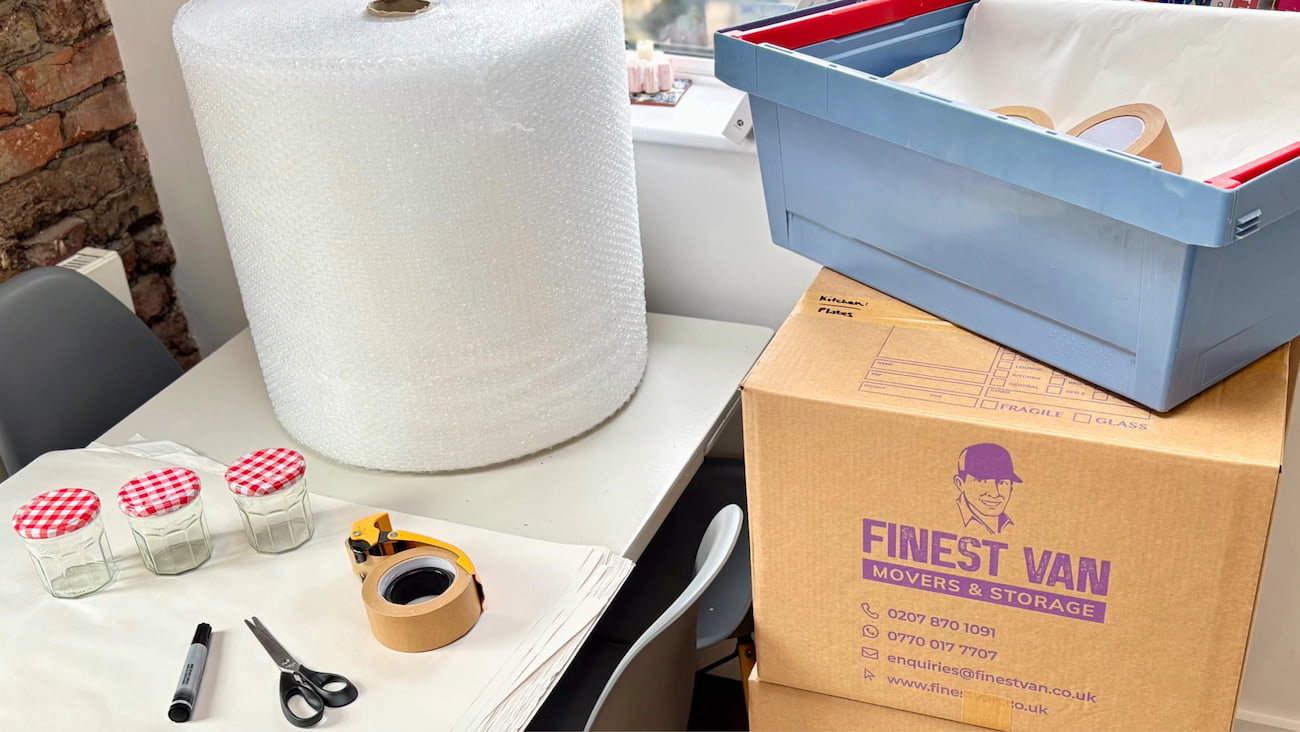
Tape the base in a criss-cross pattern for stability.
Line the bottom with paper for added cushioning.
Keep weight distribution balanced by placing heavy items at the bottom and padding void fill with towels, clothes, or bubble wrap.
Label each box and utilise fragile labelling when needed.
Implement colour-coding to sort rooms quickly.
Always pack an “open first” essentials box.
Now you know how to pack with free boxes more effectively. However, free boxes are not always wise, such as when transporting artwork. Here’s our guide on how to package artwork for moving house.
Moving Day Logistics (and When Pros Save the Day)
Moving day is here. The issue: your free box collection isn’t enough. This is when your “professional movers near me” search can bear fruit.
Trained teams can bring packing materials to cover any gaps. They can also protect floors, wrap furniture, and handle heavy, awkward items with care. Need assistance with dismantling or reassembly? Last-minute packing? They can also take on these tasks when needed.
Are you relocating in West London? For reliable help from insured movers, you can request a quote today and see how our trusted West London removals company can support your move.
Book My Move With Finest Van