

The Complete Guide to Moving Appliances Safely in the UK
Moving appliances is very different from moving furniture. Large household appliances contain electricity, water lines, heating elements, cooling systems, and heavy components with a shifting centre of gravity. That’s why moving appliances requires careful preparation and proper safety steps.
In this complete guide to moving appliances safely in the UK, you’ll learn the essential steps for fridges, freezers, washing machines, dishwashers, cookers, and ovens. You’ll also get a full equipment list, guidance on protecting your home and floors, and clear advice on when to call professionals.
 Last updated: 13 July 2026
 Read time: 17 min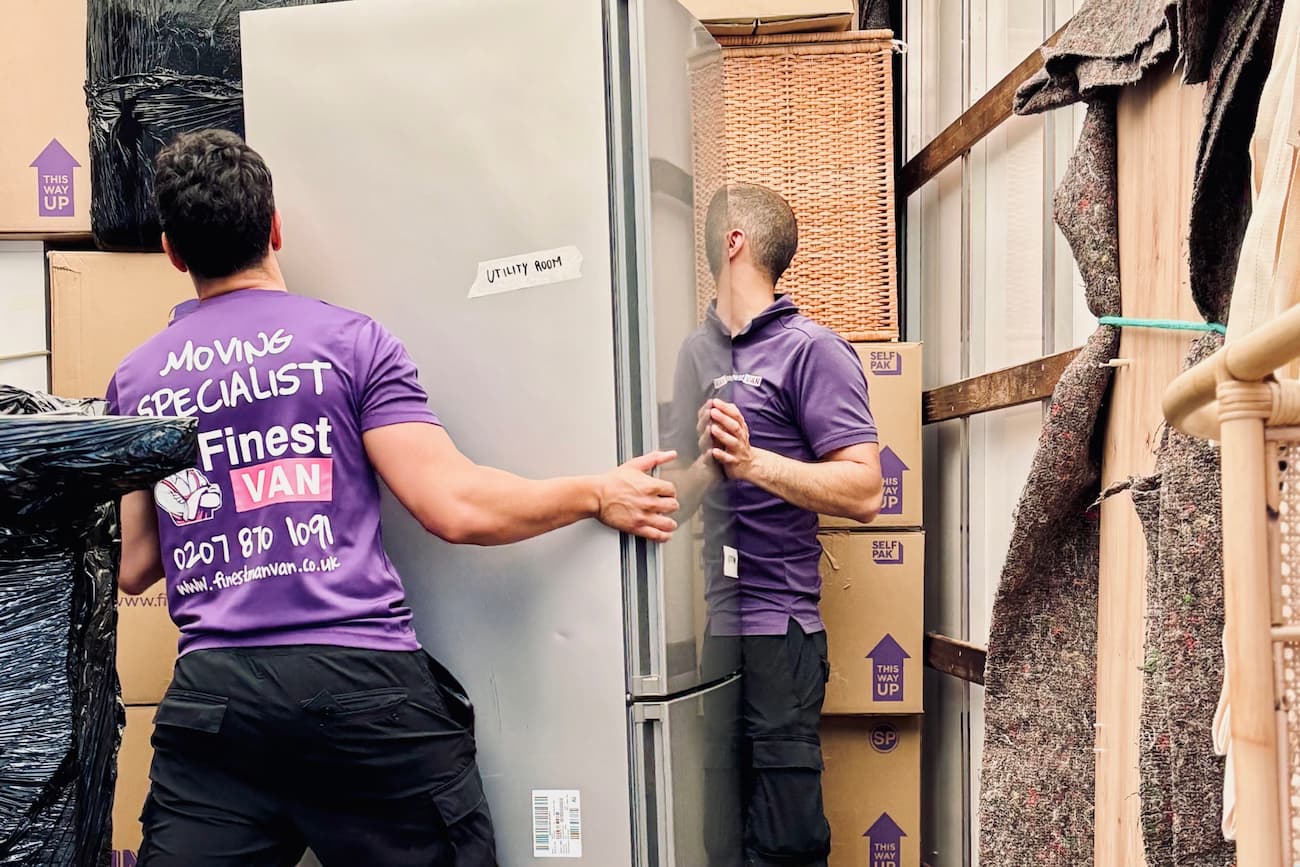
Safety comes first throughout this guide. Gas work must always be handled by a qualified Gas Safe engineer, for instance. Fridge freezers require a set “stand time” after transport, while washing machines require their original shipping bolts to prevent internal damage. By the end of reading, you’ll know exactly how to manage your appliance move safely and correctly.
Safety & Legal Basics (Read This Before You Move Anything)
Don’t disconnect or move any appliance just yet. First, you must follow essential appliance moving safety steps. Always isolate power using the correct isolation switch or RCD, and turn off water at the stop tap before detaching any hoses. You also need to clear all routes ahead of time and wear proper PPE, including gloves and supportive footwear. Additionally, never attempt to lift more than you can safely manage.
For gas appliances, the rule is absolute. Only a Gas Safe engineer can carry out your gas cooker disconnection. UK residents must follow this rule for two reasons: it’s a safety requirement and a legal obligation. Incorrect handling of gas appliances can cause carbon monoxide CO risks, fire hazards, and liability issues. That’s why this guide doesn’t include any DIY gas instructions. Whenever a gas appliance needs to be disconnected, you must hire a certified professional.
For liability/insurance evidence, one tip is to take photos and record serial numbers before you begin. Why? Because if an appliance is damaged due to improper handling or non-compliant disconnection, it might invalidate liability or home insurance cover. Safe preparation protects both your home and policy.
Essential Equipment & Home Protection
- Appliance dolly
- Moving straps
- Floor protection
An appliance dolly with straps allows you to better control the load distribution and maintain its centre of gravity over the wheels. Ratchet straps or tie-downs keep appliances secure during transport, while moving blankets prevent scratches to surfaces. You can use a ram board or hardboard sheets to protect floors along the routes. Oh, and don’t forget to add corner guards and door frame protectors. These are beneficial for preventing chips and dents. Small yet effective suggestions include wearing high-grip gloves for better stability, while stair sliders, zip bags for screws, and tape on hand are useful for a clean, organised move.
Remember that whenever you use lifting equipment, check that the weight is balanced and tied to proper tie-down points. Plus, before lifting anything, measure doorways and hallways, and plan the full load path so you’re never forced into awkward angles – literally.

Fridge & Freezer — Prep, Move, and Restart (Step-by-Step)
Refrigeration appliances require careful planning. Below is a structured, step-by-step sequence on how to move a fridge freezer successfully. This includes how to prepare it correctly and restart it safely after transport.
48–24 hours before
Begin by running down the food inside your fridge and/or freezer. Use up items or store them in cool bags, while you should utilise ice packs to keep essentials chilled during the move. Take photos of your shelves and drawer layout so you can reassemble everything quickly later.
Along with avoiding food waste, this preparation window reduces the risk of unnecessary leaks and odours.
24 hours before
Around one day before the move, fully defrost the fridge freezer. One tip is to leave the doors open to allow warm air in and speed up the process, then dry every surface thoroughly. Remember, moisture can turn into mould during transport, so this step is essential.
You should pack your shelves and drawers separately. Wrapping them in bubble wrap or even just towels prevents cracks from occurring.
Move day
On the day of the move, tape the doors shut using non-residue tape to keep everything secure. If possible, always keep the appliance upright and avoid laying it flat unless absolutely necessary. This is because tilting can cause compressor oil to enter the coolant lines. Finish this step by loading from the side using a dolly and securing it with straps to further prevent door swing.
After delivery
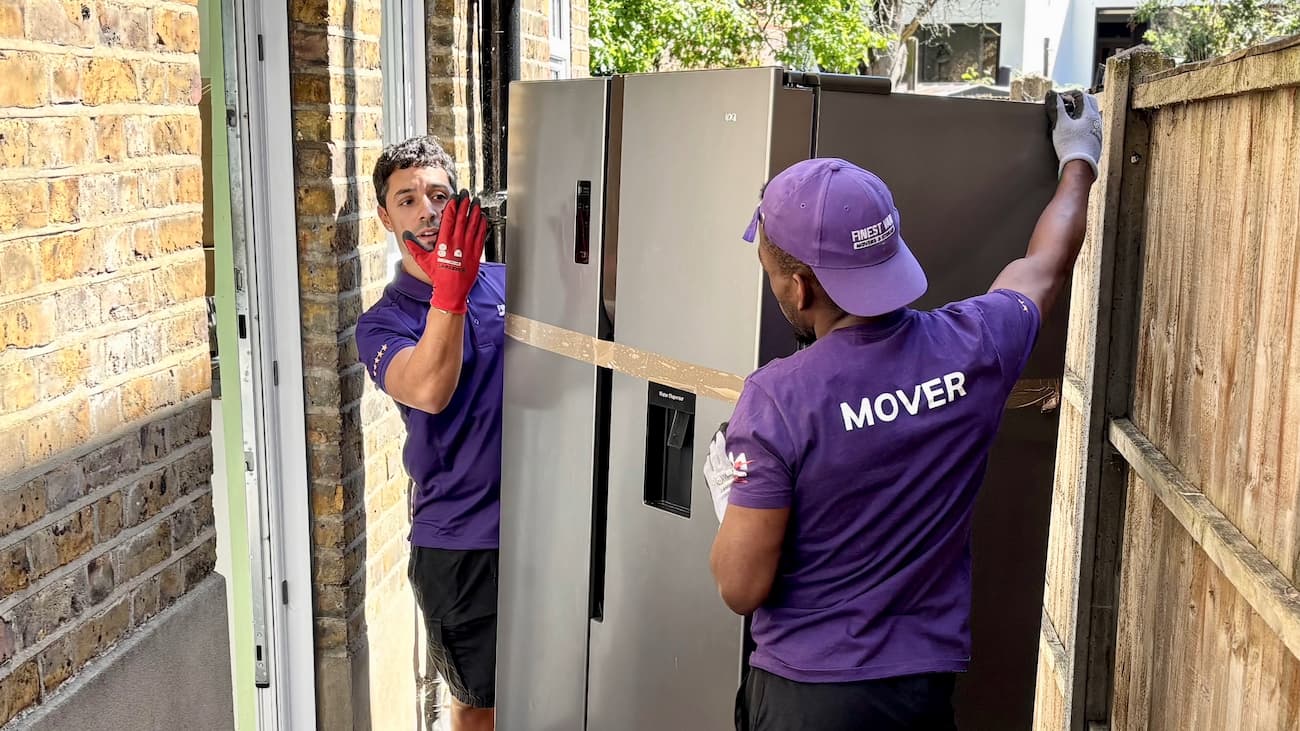
Once delivered, you will want to protect surrounding floors and walls as you manoeuvre the appliance. Always avoid forcing it through any tight spaces. If room is at a premium, you can potentially remove doors if extra clearance is necessary.
Next, give the appliance its required fridge stand time before powering it on. This is typically several hours, although it will be longer if the appliance was moved on its side. Either way, always follow the manufacturer’s guidance. Wait until the interior reaches the correct temperature before restocking food.
Washing Machine — Drain, Secure, and Move (Step-by-Step)
Washing machines are heavy, drum-suspended appliances relying on internal suspension springs and shock absorbers. That’s why correct preparation is essential when you move washing machines. UK residents must follow the steps below, which show how to drain the washing machine, get it ready for transportation, and more.
Disconnect & drain
Start by isolating the power and switching off the water supply. Run a drain or empty cycle to clear internal water, then follow this up by removing the inlet hose. Don’t forget to train the filter. We recommend placing a towel or tray underneath, as this can release more water than expected.
Cap or bag hoses to keep them tidy and prevent drips during transport.
Re-fit transit/shipping bolts (critical)
Washing machine transit bolts are essential when moving this appliance. These bolts lock the drum in place to avoid damage to the suspension system. You can locate the bolt points on the rear panel and insert the original transit or shipping bolts following the manual’s instructions.
Never transport the machine without these bolts in place, as internal damage can be both severe and costly. Transport locks are an ideal fit.
Wrap & transport
Wrap the machine in moving blankets and always keep it vertical. Strap it onto a dolly, checking the load is stable and balanced. Only remove the transit bolts once the machine is in its final position in your new home.
Dishwasher — Disconnect, Dry, and Secure (Step-by-Step)
As they hide a surprising amount of residual water, proper draining and drying are essential when you move a dishwasher. Below is the correct sequence for how to disconnect and drain your dishwasher before transport.
Power & water off
Start by switching off the power and isolating the water supply. Keep in mind that residual water can escape when hoses are removed, so have some towels and a bucket ready.
Disconnect & drain
To disconnect dishwasher, UK households need to first detach the inlet and waste hoses carefully, tipping the appliance slightly to purge trapped water. Leave the door open afterward so the interior can air-dry. When you drain the dishwasher correctly, it prevents mould during transport or storage.
Prepare to move
Secure racks and spray arms with either tape or padding. Tape the door shut, wrap the appliance, and use a dolly with straps for safe handling. Protect edges and corners to prevent cabinet damage during manoeuvring.
Electric Ovens & Hobs — Isolation and Handling
When you disconnect an electric oven, safety begins at the consumer unit. Always isolate the circuit using the correct MCB. Following MCB isolation, confirm the oven is fully powered down before handling anything. Are you dealing with a hard-wired spur, bayonet fitting note, or dedicated rated cable? In this case, you should arrange for a qualified electrician to disconnect and reconnect. This avoids the likes of wiring faults and heat-damage risks during reinstallation.
It's wise to remove shelves and loose components in advance, and wrap fragile parts such as the glass door and control knobs. Be cautious of internal frames and rear panels, which tend to contain sharp edges. When you move a cooker, UK residents need to remember three essentials: upright handling, careful loading, and proper padding.
Gas or dual-fuel cookers require professional intervention. A registered Gas Safe engineer must exclusively carry out any disconnection. A Gas Safe disconnection is a legal requirement, and DIY attempts can create carbon monoxide risks and invalidate insurance. Never leave it late. Always schedule gas work well in advance of move day.
Big-Item Handling Techniques (to Avoid Injuries & Damage)
Discipline. Communication. The right technique. These are the qualities required when lifting and manoeuvring heavy domestic appliances. To avoid strain and damage, the following skills highlight the safest methods for team handling.
Team moves & clear commands
Working as a team means coordinating every lift and pivot. Use clear countdowns before each movement, and designate a single leader to call instructions. Slow, deliberate motions help you achieve balance and help you to lift safely. Keeping communication clear prevents sudden shifts, which could destabilise the load or injure a team member.
Tilt, pivot, and slide
For thresholds and tight turns, tilt the appliance slightly to find its centre of gravity, then pivot gradually rather than forcing the appliance around. To reduce friction over delicate surfaces, use either furniture sliders or sheet protectors. Additionally, keep the load always balanced over the dolly and never twist your torso while lifting.
Stair work
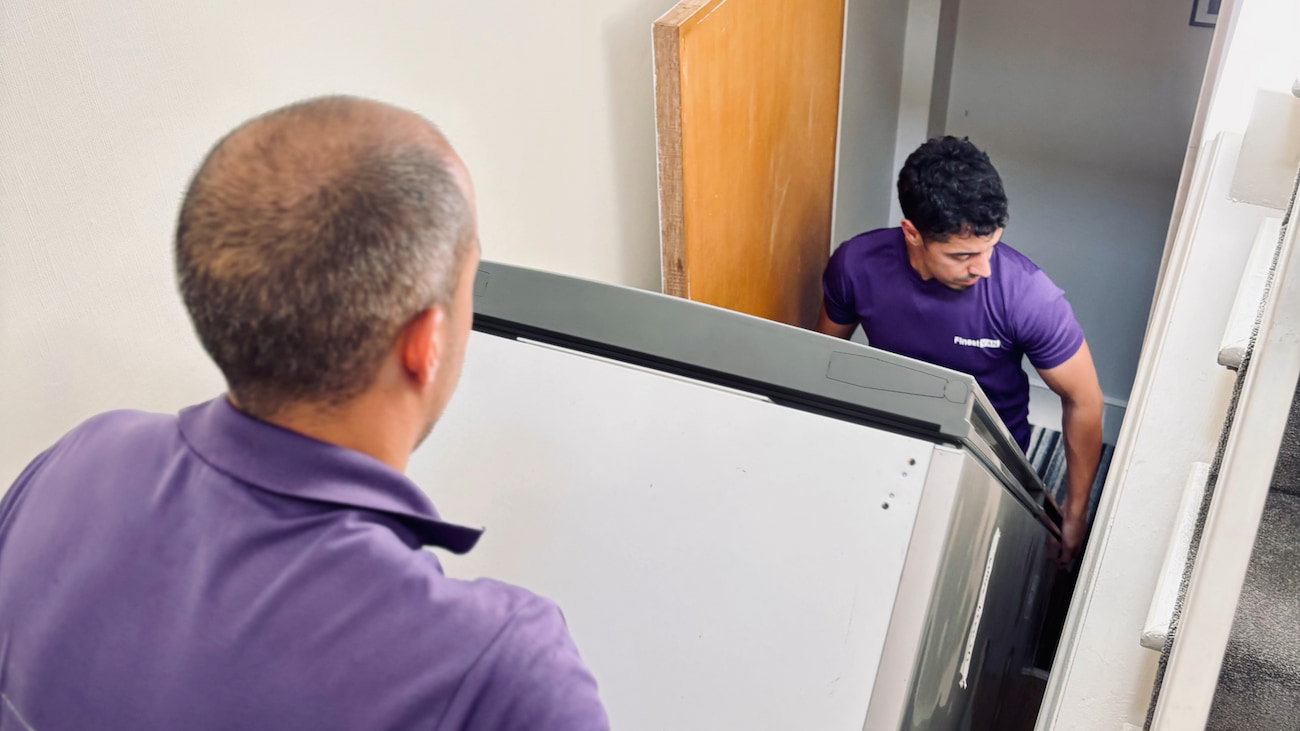
When you need to move heavy appliances upstairs, use a stair climber or stair dolly designed for stepped movement. Take each stair one wheel at a time, keeping the load controlled and centred. Protect stair treads with temporary coverings and remove handrails only if authorised. Good planning and slow pacing prevent sudden shifts while keeping everyone safe on the stairs.
Room and Route Prep (Save Time & Protect Property)
When moving appliances safely in the UK, proper planning prevents damage and delays. Before lifting anything, get the tape measure out. Measure doorways, stair widths, tight corners, and lift dimensions to confirm each appliance will fit. You might need to remove internal doors or banisters if required and approved.
Lay continuous floor protection along the route. This is necessary to protect floors, especially on laminate, tile, and hardwood. Add padding to the likes of corners and radiators to prevent dents. Your moving route plan should also include reserving building lifts and scheduling loading bay access. For a safer work environment, keep pets and children secured in a separate room when applicable.
If You’re Moving Long-Distance (Timing, Resets & Checks)
A long-distance appliance move naturally requires extra planning. Aside from movement during transit, it’s necessary due to the need to control condensation and temperature shifts. Over longer journeys, excess moisture could build up inside refrigerators and dishwashers, so always allow appliances to air out before reconnecting. Plus, fridges and freezers require a full stand time at the destination, especially after long journeys.
As part of your route planning, ensure you’re present for safe reconnection and setup of your appliances. Once in your new home, re-level every appliance to avoid vibration, noise, and long-term wear. Check all connections and seals for leaks or damage.
Do you require assistance transporting appliances across the country? Consider our reputable UK national removal services.
Common Mistakes That Cause Damage (and How to Avoid Them
- Not refitting the washing machine transit bolts, which results in washer drum damage.
- Powering a fridge too soon or transporting it incorrectly. The latter includes having a fridge lay flat rather than upright.
- Skipping dishwasher drain and dry steps. This can cause leaks during transit.
- Attempting DIY gas disconnections instead of using Gas Safe engineers.
- Draining appliances without floor protection or leaving shelves/doors loose.
Time & Cost Savers (Without Cutting Corners)
- Label connections clearly.
- Photograph hose and wire routes.
- Bag all screws and fittings in separate, named pouches.
- Book engineer appointments well in advance.
- Pre-book parking permits and building lifts (when applicable).
When you implement this level of detail to plan moving day efficiently, you reduce overtime and stress levels.
FINEST TIP:
1. Choose a lower-demand moving day to further reduce total costs. For guidance on timing, see our guide on the cheapest day to move.
Capacity & Vehicle Choice for Appliance Moves
- One appliance plus several boxes → small or MWB van.
- Multiple white goods plus furniture → LWB or Luton van, offering higher headroom, a tail-lift, and more anchor points.
When moving appliances safely in the UK, the final choice depends on various factors. Think about inventory, property access, parking distance, and specific handling needs. For more details on matching vehicles to your load, see our guide on removal van sizes for appliances.
 Book My Move With Finest Van
