

Office Relocation Checklist for SMEs
 Last updated: 13 July 2026
 Read time: 16 min
Office Move Checklist
A strong office move checklist should lay out every task in clear phases. By doing this, businesses can track dependencies, avoid missed deadlines, and keep the relocation under control. Use this fast overview for your SME office move:
12 to 16 weeks out
Confirm scope, goals, budget, and timeline.
Notify your landlord. Check lease terms, dilapidations, and deposits.
Shortlist new offices. Run an IT audit and request ISP lead times.
Build your move team. Confirm who will make decisions and sign off key actions.
Commission floor plans, cabling plans, and furniture specifications.
6 to 8 weeks out
Lock the final floor plan, desk allocations, AV, and storage.
Coordinate with building management, including loading bay access, lift bookings, and access passes.
Book a removals firm. Confirm the volume of items to move and whether storage is needed.
Communicate timelines to staff and key customers. Set dates for staff briefings and move-day instructions.
2 to 3 weeks out
Finalise the move-day runbook, vehicle and crew schedule, and loading bay bookings.
Label crates and boxes. Protect floors and walls, and run final walkthroughs.
Share staff packing instructions. Distribute essential “open-first” boxes.
Move week and move day
Confirm IT blackout and cutover windows. Put site protections in place.
The move lead monitors activity and manages customer notifications.
Complete first checks and sign off critical systems, including phones, Wi-Fi, and security.
Week 1: Post-move QA
Complete de-snagging, warranty handovers, finance reconciliation, and user feedback sessions.
This office move plan gives you a clearer view of each relocation phase, from initial approval to post-move quality assurance.
Set Goals, Scope & a Realistic Timeline
Before anything else, there’s one task you need to complete: define what success looks like for your move. Pin down your office move timeline and office relocation plan with three essentials:
A clear budget
A hard go-live date
An acceptable downtime window
From this point, you can build a critical path that identifies dependencies and non-negotiables.
Your critical path should include notice to the landlord, reinstatement and dilapidation deadlines, fit-out and cabling milestones, furniture lead times, and ISP lead times for circuits. Add dates for confirming removals, crate hire, IT configuration, and user acceptance testing.
By doing this work early, you create a dependency-driven, milestone-based plan that keeps the relocation aligned with operational needs. SMEs regularly underestimate the sequencing between IT circuits, fit-out works, security systems, and staff communications. For this reason, it helps to map everything visually.
Once approved, circulate the timeline to all stakeholders so decisions and sign-offs remain fast and friction-free.
Build Your Move Team & Roles
A smooth relocation starts with a named project owner, also known as your move lead. From there, create an office move team with clearly designated roles and responsibilities. The right team structure prevents decisions from stalling.
Typical roles for SME office moves include:
IT lead: Network, Wi-Fi, devices, AV, access control
Facilities lead: Fit-out coordination, contractors, RAMS, floor protection
HR/comms lead: Staff updates, signage, wayfinding, policies
Finance lead: Budget control, deposits, PO approvals, contingency
Floor wardens: Team-level crate labelling, headcounts, safety
When putting together your team, you must define who signs off on spending and who approves layout changes. You should also appoint someone to lead move-day decisions. One useful tip is to document the escalation matrix, so everyone knows where issues should go at each severity level.
With clear ownership and stakeholders aligned, the project is best placed to run like a proper SME relocation programme, not an ad hoc scramble.
Budget & Commercial Checks: Lease, Dilapidations, Deposits
It’s always wise to create a transparent office move budget by listing every expected cost line. In this budget, you should cover:
Dilapidations
Deposits
Fit-out costs
Cabling
Removals
Crate hire
Storage
Cleaning
Security
Specialist IT contractors
New furniture
10 to 15% contingency
Once these costs are listed, you have a reliable baseline for approvals.
Review your lease for exit obligations using an office dilapidations checklist. This checklist will cover reinstatement, decoration, repairs, floor boxes, signage, and waste removal. Always capture potential disputes early so there are no last-minute surprises.
For the new office, agree payment schedules, snagging responsibilities, and handover requirements with the landlord, agent, or fit-out contractor.
Assign financial authority to your finance lead and track all commitments against the baseline. With a complete cost model covering deposits, fit-out costs, reinstatement, and more, you retain control and keep your leadership aligned.
If you need practical support with the physical move, our team can help with planning, packing, lifting, loading, and careful transport.

IT & Telecoms: Protect Uptime
A solid office IT relocation checklist is essential for protecting uptime and avoiding costly overruns. After all, for any modern SME, tech is the foundation for all operations, so plan early.
Start by requesting ISP circuit dates immediately. The reason is simple: ISP lead times can exceed 60 days. Add VoIP porting windows to your timeline. Next, map the following:
Cabling needs
Switch stack
Firewall configuration
Wi-Fi design
Printer network
AV requirements
Access control
UPS positioning
Cooling for comms rooms
Then prepare asset tags, device collection procedures, patching plans, and backup and restore test schedules. Build blackout windows to reduce business disruption and document a rollback plan in case the go-live fails.
These steps form the operational heart of any office IT relocation project and dramatically reduce outage risk.

Building Access, Lifts & Loading: Coordinate with Management
It’s important to coordinate early with building management using a structured office move access checklist. Confirm the following:
Loading bay slots
Goods lift reservations
RAMS submissions
Permits to work
Contractor inductions
Out-of-hours rules
Security passes
Parking arrangements
Clarify how floors and walls must be protected, as well as whether any areas require mats, boards, or corner guards. Smooth building management coordination helps prevent move-day delays and keeps contractors compliant.
Supply all documentation, including insurance, RAMS, and certifications, well in advance. You should also share approved access procedures with your removals team.
Space Planning, Furniture & Crates
A practical office space planning checklist helps you lock in your layout early. Use this checklist to finalise the following:
Headcount
Team adjacencies
Meeting room locations
Collaboration areas
Storage
Crate labelling
DSE-compliant desk standards
AV positions
Wayfinding signage
Printer points
Another wise move is to build an office crates plan. This should include crate counts per department, colour-coded labels, and an adjacency plan. It should show where each team, crate, and workstation needs to go on move day.
Ultimately, the clearer the plan, the faster the setup.
Records, HR & Compliance: GDPR-Safe Move
A secure, compliant transition starts with a GDPR office move checklist, which sets clear rules for how files, devices, and legacy media are handled. Along with enforcing strict data minimisation, you should mandate secure file move procedures for every team.
Sensitive HR archives, payroll data, and backup drives should follow a documented chain of custody and be logged in the asset register.
Another important step is to arrange certified shredding for obsolete media and secure encrypted transport for anything that must be retained. Refresh your H&S assessment to cover temporary hazards, and confirm first-aid and fire marshal coverage during the move.
Taking these steps keeps compliance tight and risk low throughout the relocation.
Finest Tip
If you are relocating an office, keep a simple asset register for sensitive files, devices, backup drives, and IT equipment. It gives your team a clearer record of what moved, who handled it, and where it ended up.
Stakeholder Communications: Staff, Clients, Suppliers
A strong office move communications plan doesn’t just prevent confusion. It also protects the customer experience.
To make this plan work, build a staged communications process with timeline emails, mapped responsibilities, and an FAQ pack. This FAQ pack should cover directions, building access, and emergency contacts.
Create a change of address checklist so your team can update your details everywhere they appear:
Website
Email footers
HMRC
Companies House
Banks
Insurers
Stationery
Google Business
Include supplier notices and platform change-control steps as part of this process. It’s also wise to supply maps, transport options, and a short welcome guide for staff.
These address updates mean no one is left guessing, and all stakeholders stay fully informed throughout the move.
Pre-Move Clean-Down & Exit: Old Office
When leaving, follow a structured office exit checklist that aligns with your lease conditions and any required dilapidation or reinstatement works.
Start with a full declutter. Identify surplus equipment for donation, resale, or approved WEEE disposal. Once the equipment has been removed, schedule deep cleaning and confirm reinstatement works such as patching, painting, and removing partitions.
Remember to document everything with photos to build an accurate snag list. Finally, capture final meter readings, complete a keys audit, and return passes or fobs to building management.
A clean, organised exit reduces disputes and allows you to recover deposits with minimal friction.
Day-of-Move Runbook: Hour-by-Hour
On move day, your office move day checklist becomes the single source of truth. Start by building a timestamped move runbook covering:
Unlocks
Arrival windows
Lift and loading lane control
Team briefings
Crate sequencing
IT and print cutover
It’s wise to assign a small command centre team to oversee updates and decisions. Schedule phased smoke tests to check connectivity, printers, AV, and critical apps. Note downtime expectations and include clear decision gates for rollback or escalation.
A structured plan keeps everyone synchronised and prevents last-minute chaos.
Post-Move QA & Hypercare: Week 1
In week 1, your post-move checklist should focus on stabilisation and rapid response.
Begin by running IT UAT on Wi-Fi, VPN, phones, login services, and printers. Set up a dedicated hypercare desk or “war room” for rapid ticket triage.
Walk the floors with facilities to build an accurate office snagging list, checking air conditioning, lighting, access control, and DSE layouts.
Complete an H&S induction for staff and confirm address updates have propagated to suppliers and systems. Finish with a short feedback survey to catch anything missed.
How to Minimise Downtime: Fast Wins
To minimise downtime during an office move, build your plan around smart staging and redundancy. By using these fast-win tactics, you can keep teams productive, protect business continuity, and reduce the risk of overruns.
Each step supports a smoother workflow and helps reduce downtime while applying proven office move tips.
To get your staff up and running from day one, here are our recommended tactics to minimise downtime:
Run a staged migration, so critical teams move last and essential services stay live.
Use a weekend cutover to buy extra testing time without damaging trading hours.
Pre-install trunking and pre-cabled desks before moving day.
Deploy a colour-coded labelling system so crates land in the right spots instantly.
Use pre-built images for all laptops and desktops to enable rapid workstation setup.
Arrange duplicate ISP overlap to avoid outages during circuit handover.
Push printer drivers and core applications before move day.
Assign trained floor marshals to guide teams and escalate blockers.
Prepare a small command centre to coordinate the cutover and track fixes.
Want to learn more? See our full guide on how to minimise downtime during an office move.
When to Hire Specialists and What to Ask
Does your move involve multi-storey buildings? Fragile servers? Tight deadlines? Strict out-of-hours access rules? In situations like these, it is worth hiring an office removal company London SMEs can rely on.
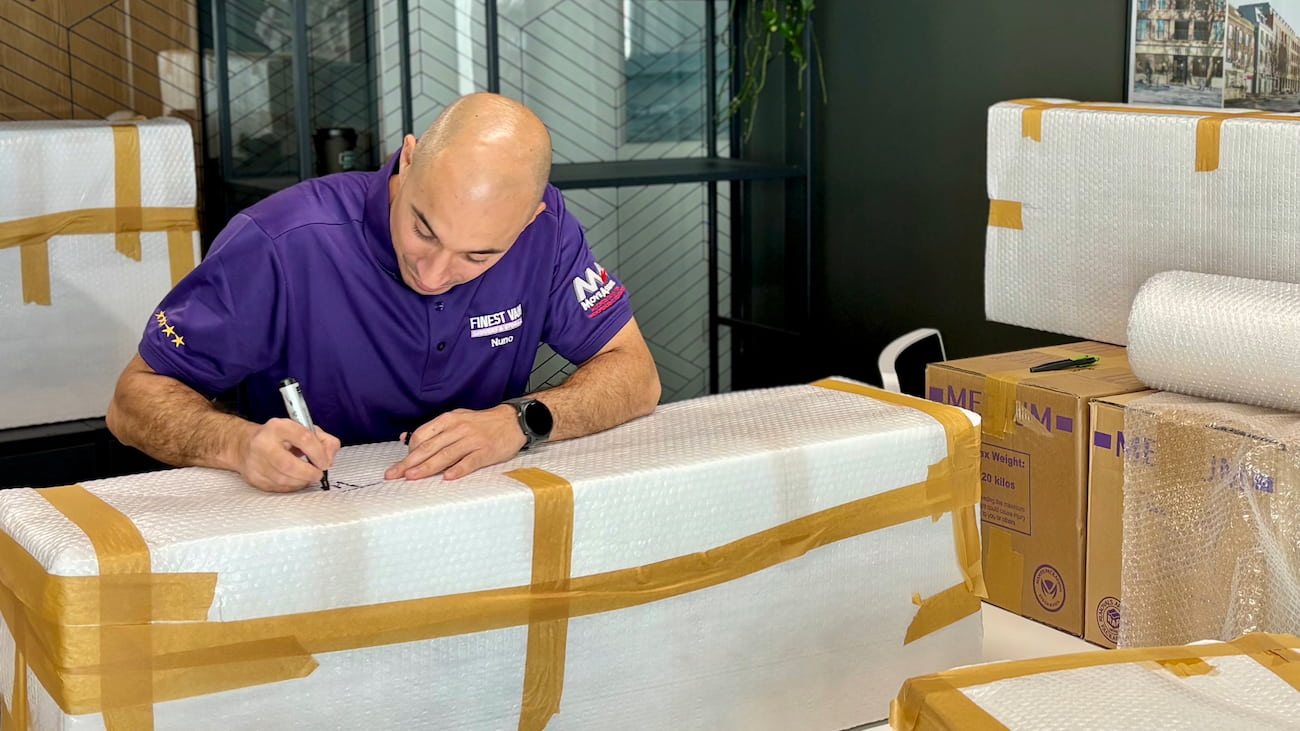
Professional office movers bring expertise in RAMS, crate planning, secure IT handling, and coordination with building management.
Not sure what to ask before choosing a mover? Ask about insurance levels and what is covered during the move. You should also ask about their experience with data-sensitive relocations, server transport, and lift bookings. Ask for references or case studies to verify their experience.
Need fast, tailored support for your SME move? Speak to our team today about professional office relocation in London.
Speak to Our Office Removal Team