The Best Way to Package Artwork When Moving House
Moving house is stressful enough without worrying about damaging valuable artwork along the way. Whether it’s your favourite canvas, a glass-framed print, or a small sculpture with sentimental value, artwork needs more care than everyday household items. Poor wrapping, weak boxing, or laying pieces flat during transit can lead to cracks, scratches, or surface damage. The good news is that most of this is avoidable with the right preparation. In this guide, we’ll explain how to package artwork for moving house in the UK safely, from wrapping materials and boxing methods to loading advice and when to call professional art handlers.
 Last updated: 13 July 2026
 Read time: 16 min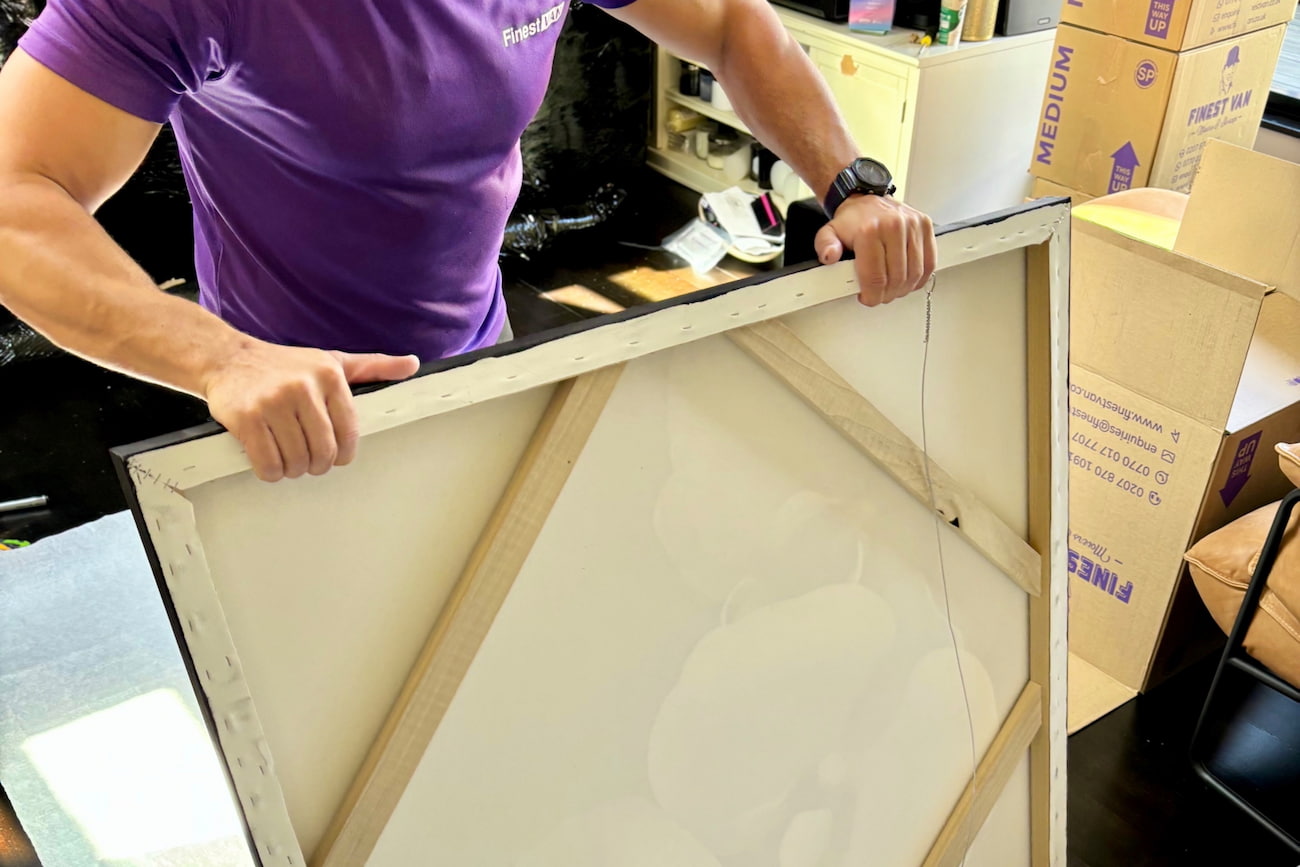
Quick Start: How to Package Artwork for Moving House
Here’s a quick and simple 7-step guide to help keep canvases, framed pieces, and small sculptures safe during your move:
- Clean and Photograph: Gently dust your artwork and take clear photos of the front and back. These can be very useful for insurance purposes or if any marks appear during transit.
- Protect the Corners: Use corner protectors or pieces of foam to shield vulnerable edges, especially on framed pieces and canvases.
- Wrap Carefully: Cover surfaces with acid-free, non-stick tissue or glassine before adding outer protective layers.
- Pad for Safety: Wrap the artwork in bubble wrap or foam sheeting, with the bubbles facing outward, and secure the outer wrapping without taping directly onto the artwork.
- Box or Crate: Place the wrapped piece in a snug double-wall box. For larger or high-value items, consider using a custom picture crate with enough room for padding around the edges.
- Label Clearly: Mark boxes with “FRAGILE”, add arrows for “THIS SIDE UP”, and note the destination room where helpful.
- Load Upright: Always transport artwork upright, never flat, and secure each piece along the van sidewalls or against a padded flat surface.
For framed artwork with glass, it also helps to remember the “glass faces cardboard” rule. In simple terms, the glass should face inward towards an inner cardboard layer so any impact is absorbed by the outer protective layers.
💡 Finest Tip:
Even small canvases and prints deserve extra care. Keeping artwork upright, padded, and clearly labelled goes a long way in reducing the risk of damage during transit.
Materials Checklist (What You Really Need)
Packing artwork safely starts with having the right materials ready before you begin, as this saves time, reduces stress, and makes it much easier to protect delicate pieces properly.
Here are the main materials you’ll need and why they matter:
| Material | Best For | Why It Helps |
|---|---|---|
| Acid-free tissue and glassine paper | Paint surfaces, prints, and delicate finishes | Protects artwork without leaving marks or sticking. |
| Corner protectors | Frames, canvases, and exposed edges | Shields vulnerable corners from knocks during handling. |
| Bubble wrap | Outer cushioning and impact protection | Adds padding around protected artwork. Keep bubbles facing outward. |
| Cardboard sheets | Framed pieces and flat artwork | Creates a protective sandwich and helps spread pressure evenly. |
| Double-wall boxes or artwork cartons | Boxed artwork, framed pieces, and smaller canvases | Keeps artwork snug and helps prevent crushing. |
| Painter’s tape | Glass, frames, and temporary securing | A gentler tape option that is less likely to damage surrounding materials. |
| Stretch wrap | Holding bubble wrap, foam, or cardboard in place | Useful for keeping protective layers secure around awkward shapes. |
| Foam boards | Canvases, prints, and multiple flat pieces | Adds rigidity and helps separate artwork safely. |
| Packing paper | Filling gaps in boxes or crates | Reduces movement and helps absorb impact during transit. |
| Labels and markers | All packed artwork boxes and crates | Makes handling instructions clear, including room location and fragile notes. |
If you’re still gathering packing materials, you may also find our guide on where to find free moving boxes in the UK useful.
What Not to Use
Avoid the following when packing artwork for moving house:
- Newspaper: Avoid placing this directly against artwork surfaces, as ink can transfer.
- Duct tape: Too aggressive for frames, canvas edges, or delicate finishes.
Having the right supplies on hand makes the whole process smoother, safer, and much less stressful.
💡 Finest Tip:
Paper tape is great for packing because it is strong, durable, and easy to remove when unpacking. It is also eco-friendly and sustainable, making it a win-win for your move and the planet.
Prep Step: Condition Check, Photos and Insurance
Before wrapping anything, take a few minutes to document your artwork properly. Photograph the front and back of each piece, including the corners, frame edges, and any pre-existing marks. If there are existing scratches, chips, or signs of wear, it's a good idea to make a note of them.
This gives you a simple condition record to check against once everything is unpacked and if any new scuffs or damage appear after the move, you’ll have a clear point of reference. It also makes life easier if you need to make an insurance claim.
Keep any receipts, valuations, or certificates together in a safe place. For high-value pieces, it is worth checking whether your current policy provides enough cover or whether you need extra transit insurance. Where required, make sure you declare accurate values to your movers too.
Finally, place any removed fixings or hanging hardware into labelled bags and store them safely so nothing goes missing.
A quick condition check and insurance review can give you real peace of mind before moving day begins.
Framed Art with Glass (Safe Method)
When you pack framed art with glass, the aim is simple: protect the surface, reduce movement, and avoid direct pressure on the glass.
Start by applying painter’s tape in a light cross across the glass. This will not stop the glass from breaking, but it can help reduce shattering if it does crack. Then cover the front with glassine paper and fit corner protectors around the frame.
Next, wrap the piece in bubble wrap with the bubbles facing outward. Following this, create a sturdy cardboard sandwich by placing thick cardboard sheets on both sides. This adds rigidity and helps spread pressure more evenly.
Place the wrapped frame into a snug double-wall box and add padding around the edges, taking care not to put pressure directly on the glass.
Finally, finish by clearly labelling the box with “GLASS - KEEP UPRIGHT”. As mentioned earlier, always transport framed glass artwork upright, never flat, to reduce strain on the frame and help protect glass pictures when moving.
Unframed Canvases and Stretched Paintings
When you pack a canvas for moving, one rule matters more than any other: never let bubble wrap touch the painted surface directly.
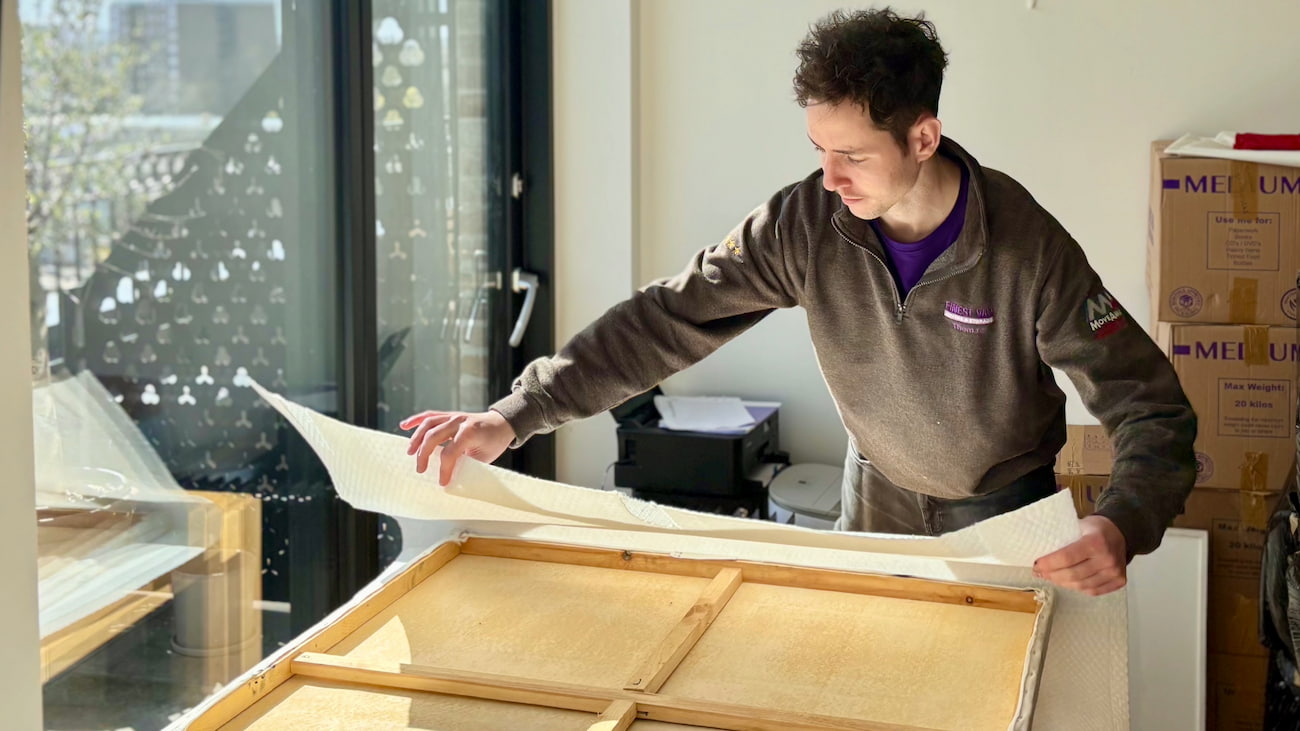
Begin by gently covering the front with glassine paper to create a protective barrier. Add corner protectors, then place a foam board over the face for extra support.
Once the canvas is protected, wrap it in bubble wrap with the bubbles facing outward. The cushioning should sit outside the inner protective layers, not against the paint itself.
If you are packing more than one canvas, separate each piece with foam boards or thick protective sheets. They can sit face to face if needed, but only when there is a proper barrier between them.
Finally, box the canvases snugly and always transport them upright to avoid pressure marks, dents, or unnecessary movement in transit.
Prints, Photos and Works on Paper
Protecting prints, photographs, and works on paper is all about keeping them flat, dry, and properly supported.
Slide each piece into an acid-free archival sleeve or wrap it in glassine to guard against smudges and scratches. Then add a rigid backing board to stop the paper from bending.
Once protected, place the pieces into a portfolio folder or flat box. Keep them near the top of any stack and avoid placing heavier items on top. If the print is valuable, it is usually best not to roll it, as even gentle curves can leave lasting creases.
Handled properly, your prints and photographs should arrive just as pristine as when you packed them: flat, clean, and crease-free.
Small Sculptures and Awkward Shapes
Flat artwork needs careful layering and support, but sculptures and other three-dimensional pieces bring a different set of challenges. Protruding parts, uneven weight, and unusual shapes all make secure packing even more important.
Start by wrapping any delicate or protruding areas first. Once those are protected, cover the main body with bubble wrap or foam padding. Then place the sculpture inside a double-wall box and fill all empty space with foam, packing peanuts, or crumpled paper so the piece sits snugly without shifting.
For particularly fragile or top-heavy items, double-boxing is often worth the extra effort. Label the outer box clearly with “TOP HEAVY” so anyone handling it knows to take extra care.
Taking these steps will help pack sculptures for moving safely and reduce the risk of bumps, knocks, and breakages on the road.
Boxing and Crating: When a Standard Box Isn’t Enough
Sometimes a standard artwork shipping box UK option simply is not enough, especially for oversized, fragile, or high-value pieces. That is where picture cartons, telescopic boxes, and light crates come into their own.
- Picture cartons: A solid option for standard framed artwork.
- Telescopic boxes: Useful when you need an adjustable fit for different artwork sizes.
- Light crates: Wooden or composite cases that offer more protection for delicate or larger pieces.
When using these, leave a small “float” clearance of around 25 to 50mm around the artwork. This helps stop the piece from pressing directly against the sides while still allowing room for protective padding. Foam edge protectors and internal bracing can also help absorb shocks and keep everything stable.
For oversized or particularly valuable works, a custom art crate in London can be built to fit the piece more precisely, giving you extra security and confidence during the move.
With the right crate or box, even awkward and fragile artwork can travel much more safely.
Labelling, Loading and In-Van Placement
Once your artwork is packed, clear labelling and careful loading are what help keep it safe from point A to point B.
Use labels or marker pen to note the room, contents, and “FRAGILE”. Add arrows to show which way up the piece should stay. These visual cues make life easier for anyone carrying, loading, or unloading the item.
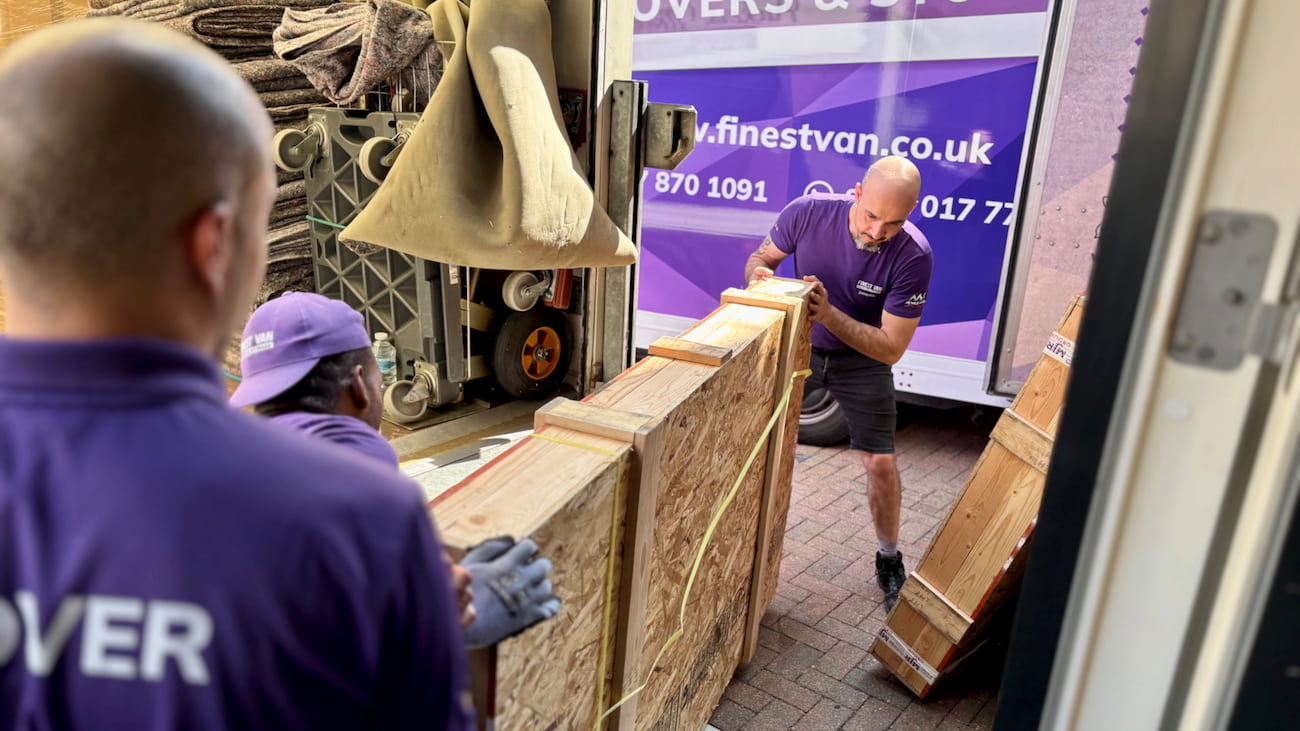
When placing artwork into the van, always keep it upright along the sidewalls or against a cushioned flat surface, never laid flat underneath other items. Use gentle straps or tie-downs to stop movement, and keep artwork away from moisture, heat sources, or anything heavy that could press against it.
It also helps to think ahead. If certain artworks need to come off first at the delivery address, position them accordingly. A little planning here can make unloading quicker, safer, and less chaotic.
Following these simple steps will help you label fragile boxes correctly and load and unload artwork safely, giving each piece the best chance of arriving in the same condition.

Common Mistakes to Avoid
Even with good preparation, a few simple mistakes can undo a lot of your hard work. To protect paintings when moving, avoid the following artwork packing mistakes:
Do
- Keep artwork upright during transport.
- Use glassine or acid-free paper before outer padding.
- Label fragile items clearly before loading.
Don’t
- Wrap bubble wrap directly onto painted surfaces.
- Use newspaper or other non-archival materials.
- Pack artwork near liquids or cleaning products.
- Place artwork boxes flat under heavier boxes or furniture.
- Tape directly onto frames.
- Skip corner protectors.
Avoiding these common packaging mistakes can make a big difference and help your artwork arrive safe, clean, and ready to hang or display again.
When to Call the Professionals
Some moves are simply too awkward or too high-risk to handle alone. If you are dealing with oversized glazing, antique frames, high-value or irreplaceable works, very tight deadlines, or staircases with tight turns, it may be time to call in professional art movers in London.
💡 Call professionals if:
- The artwork is high-value, antique, or irreplaceable.
- The piece is oversized, unusually heavy, or awkward to carry.
- There is glass, fragile framing, or tight stair access involved.
- You need extra packing, crating, or transit protection.
Working with trained handlers brings real benefits. They have the right packing materials, know how to secure artwork properly inside a vehicle, and may also be able to offer extra transit protection for added peace of mind.
For those based in West London, our team of professional West London movers are ready to help with delicate or complex art moves, taking the pressure off your shoulders and helping your pieces travel more safely.
Eco and Reuse Tips for Art Packing
Moving does not have to mean unnecessary waste. Where possible, try to reuse clean packing materials such as foam corners, bubble wrap, and sturdy cardboard. If they are still in good condition, they can often be used again or passed on after the move.
For larger items, crate hire or reusable crates can be a smart option. They offer solid protection, cut down on waste, and are often a more practical choice for valuable pieces.
And when it comes to paper and cardboard, recycle whatever is clean and uncontaminated once the move is complete.
Small steps like these make your move more sustainable while still keeping your artwork safe. It is a simple way to take a more circular approach to packing and moving.
Trust Finest Van for Your Art Move
At Finest Van, we handle moves of all kinds, including delicate artwork that requires extra care and attention. Our professional West London movers bring careful packing, secure transport, and thoughtful handling to every job, every time, helping your paintings, sculptures, prints, and frames arrive safely and stress-free.
If you need a reliable team to help move valuable or fragile items, Finest Van is here to help make the process smoother from start to finish. Get in touch for a free quote and let our team take the strain out of your art move.
Get My Artwork Moving Quote