


How Many Moving Boxes Do I Need? UK Calculator and Guide
Not sure how many moving boxes you will actually need? Cupboards, bookshelves and storage spaces can add more than expected, while ordering too many means paying for boxes you never use. Start with our interactive Moving Box Estimator, then refine your estimate using the room-by-room and box-size guidance below. We also explain how the process differs when Finest Van handles the packing for you.
 Last updated: 08 October 2026
 Read time: 9 min
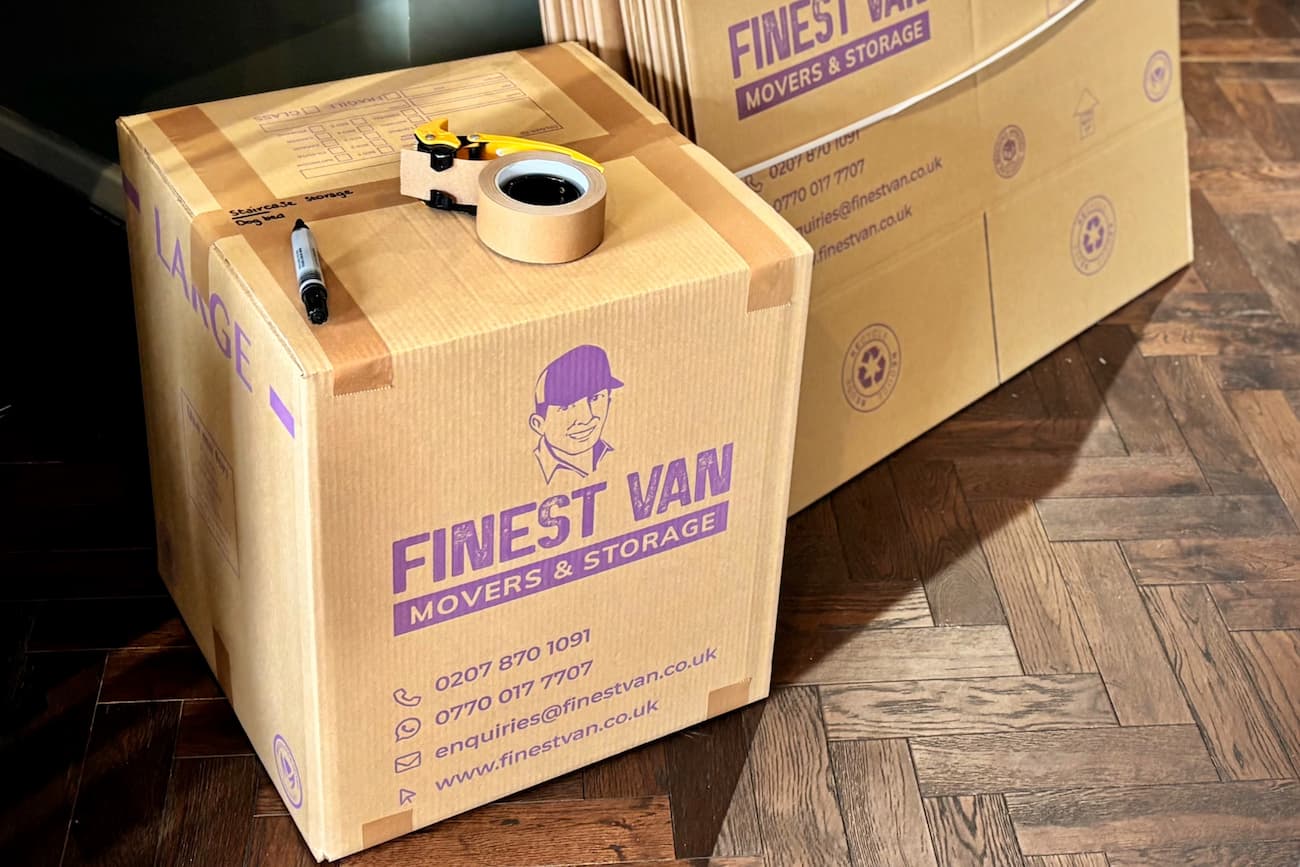
A Quick Moving Box Estimate by Property Size
Bedroom count is a useful place to start, but it rarely tells the whole story. A recently decluttered two-bedroom flat may need fewer boxes than a one-bedroom home with packed cupboards, tall bookcases and belongings stored under the bed.
That is why the figures below are given as ranges. They assume a typical amount of belongings and a mixture of medium, large and tall moving boxes.
| Property Size | Suggested Starting Range |
|---|---|
| Studio or Single Room | 20–25 boxes |
| One-Bedroom Home | 30–40 boxes |
| Two-Bedroom Home | 45–60 boxes |
| Three-Bedroom Home | 70–90 boxes |
| Four-Bedroom Home | 90–120 boxes |
| Five or More Bedrooms | 120 boxes or more |
Moving Box Estimator
Most people know how many rooms they have, but not how many boxes those rooms will produce once every drawer, shelf and cupboard is emptied. Choose the options closest to your home for a practical starting estimate.
Quick packing estimate
How many moving boxes might you need?
Select the options that most closely match your home and belongings.
How the estimate works
The calculation starts with your property size, then adjusts the range according to how full the home and its storage areas are. Wardrobe boxes are calculated separately.
Please note
Large collections and unusually full rooms can increase the general box estimate. Any picture boxes required should be added separately.

Count Your Moving Boxes Room by Room
The estimator gives you a useful starting point, but two homes with the same number of bedrooms can still pack up very differently. To refine the figure, walk through each room and look inside every cupboard, drawer and storage space. It is usually the belongings tucked out of sight that push the final box count higher.
Kitchen
The kitchen is often the room that catches people out. A few cupboards can hold a surprising amount of crockery, glassware, cookware, food containers and small appliances. Much of it also needs space for wrapping and cushioning, so allow for several medium boxes rather than placing too much weight into each one.
Living Room
A living room may appear uncluttered until cabinets, shelves and media units are emptied. Books, ornaments, framed photographs, games and electronics all contribute to the total, and a full bookcase can add several medium boxes by itself. Framed pictures and artwork may need picture boxes, while TVs and large mirrors require suitable protective wrapping.
Home Office
A home office can produce more boxes than expected once paperwork, books, cables, stationery and equipment are gathered together. Avoid overfilling medium boxes with files and books, and consider whether monitors or other delicate equipment need their original packaging or additional protection. Keep anything required for work immediately after the move in a clearly labelled box.
Bedrooms
Bedroom belongings tend to be spread across wardrobes, drawers, shelves and the space beneath the bed. Remember to include shoes, bedding, books and anything stored on top of wardrobes. Folded clothes can usually go into medium or large boxes, while wardrobe boxes are useful for clothing that needs to remain on hangers.
Bathroom and Utility Areas
These spaces are unlikely to dominate your box count, but their contents are easy to overlook. Towels, toiletries, cleaning products and laundry supplies still need somewhere to go. Make sure anything that could leak is securely closed and kept separate from clothing, books and other belongings that could be damaged. Toiletries and towels should also be packed separately from cleaning products, toilet brushes and bathroom bins.
Loft, Garage and Shed
This is where an otherwise sensible estimate can quickly fall short. Tools, seasonal decorations, sports equipment, garden items and boxes of old paperwork may have accumulated gradually over several years. Decide what is genuinely moving with you before adding these areas to your total.
Choose the Right Mix of Moving Box Sizes
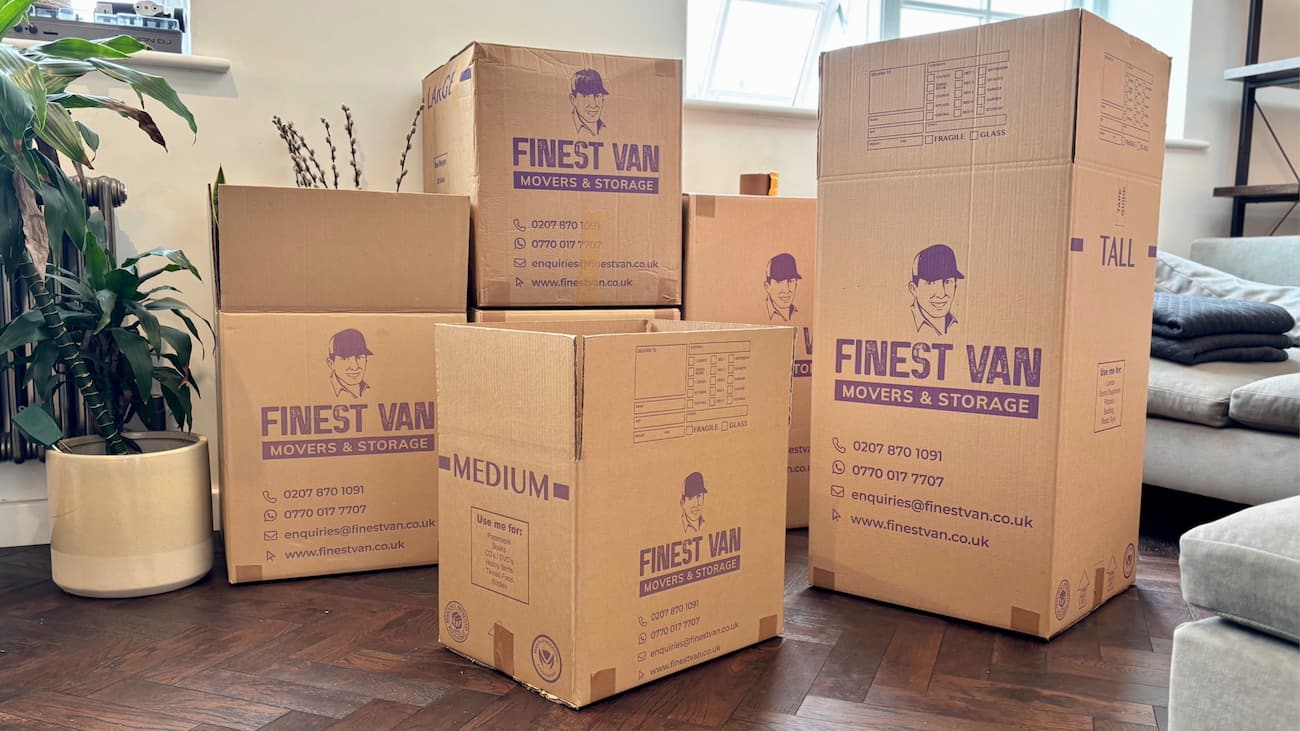
The total number is only half of the estimate. A useful packing plan also needs the right combination of box sizes. Finest Van uses medium, large and tall boxes for general household belongings, alongside wardrobe and picture boxes where something more specialised is needed.
Medium Boxes for Everyday Household Items
Medium boxes do most of the work during a typical move. They suit books, kitchenware, documents, toiletries, toys and many other household belongings. Dense items should be spread between several boxes so that each one remains comfortable to lift.
Large Boxes for Lighter Household Items
Large boxes provide more room for belongings such as folded clothing, towels, lampshades and larger toys. Avoid filling them with books or heavy kitchenware, as the weight can build quickly and place unnecessary strain on the base.
Tall Boxes for Bulky, Lightweight Belongings
Tall boxes are particularly useful for duvets, pillows, bed sheets, cushions and other bulky belongings that do not weigh very much. Their additional height makes better use of the available space without creating an awkwardly heavy box.
Wardrobe and Picture Boxes
Wardrobe boxes keep hanging clothes upright during the move, while picture boxes provide a closer fit and added protection for framed pictures and artwork. Include these separately rather than treating them as part of your general box total.
Once you have chosen the right mix, our guide explains how to pack moving boxes securely, including preparing the base, balancing the contents and sealing the top.
Adjust Your Estimate Before Ordering Boxes
Before treating the estimate as a shopping list, decide what will actually be moving with you. Packing belongings only to sell, donate or recycle them later creates unnecessary work and increases the number of boxes required. A little decluttering before a move can make the final count noticeably more accurate.
Large collections deserve a closer look too. Rather than judging a bookcase, display cabinet or record collection by its outside dimensions, work through it shelf by shelf. Dense belongings fill boxes quickly and may need to be divided between several medium cartons to keep the weight manageable.
Even a careful count may miss the contents of one last cupboard or the everyday items still being used while you pack. Keep a modest reserve of flat medium boxes available, but avoid adding a large buffer without looking at what remains. The aim is to leave some flexibility without paying for a stack of boxes you never use.
When Finest Van Handles the Packing
Box estimates are most useful when you are buying materials and packing your own belongings. With our team taking care of it, you do not need to calculate every box or carton in advance. We can assess the volume and type of belongings involved before planning what will be needed.
A home can look straightforward until wardrobes, bookshelves and storage areas are opened, so mention any full lofts, large collections, artwork or particularly fragile belongings during the quotation. Finest Van’s professional packing service can include the boxes and protective materials required for the move.
Where Can You Find Free Moving Boxes?
Not every moving box has to be bought new. Places worth trying include:
- Local community groups
- Marketplace listings
- Workplaces
- Supermarkets
- Nearby shops
You may find clean cardboard boxes available for collection through any of these sources. Reusing suitable boxes can reduce the amount you need to spend, particularly for lighter household belongings.
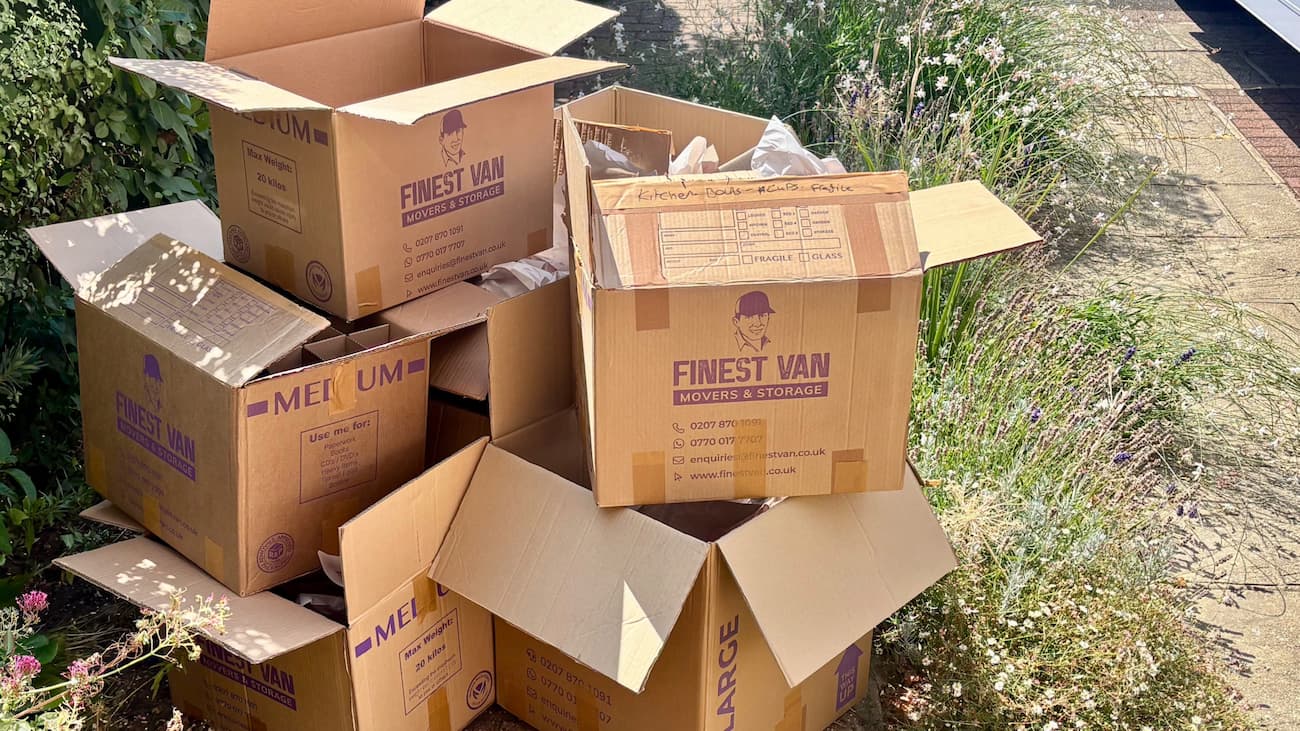
A free box is only useful if it is still strong enough for the move. Check that every carton is dry and clean, with no crushed corners, torn seams, stains or unusual smells. Previously used boxes can vary considerably in strength, so avoid relying on weaker ones for fragile, valuable or particularly heavy belongings.
For more advice on sourcing suitable used boxes locally, read our guide to finding free moving boxes in the UK.
Your Final Box Estimate
Even a careful estimate may change once packing begins and you can see how much is actually moving with you. Treat the result as a practical range rather than a fixed number that must be followed exactly.
Start with the calculator, then refine the range once you have decluttered and checked each room. Your final estimate should account for the mix of box sizes required and any belongings that need specialist protection.
Moving Box FAQs
1. Does a Moving Box Estimate Include Furniture?
No. A moving box estimate normally covers the smaller belongings that need to be packed into cartons. Furniture, large appliances, TVs and other items transported separately should still be included in the wider inventory for your move.
2. Can Suitcases and Storage Containers Reduce the Number of Boxes Needed?
Yes. Suitcases, lidded storage containers and other suitable containers can hold clothing, bedding and similar belongings. Avoid overloading wheeled suitcases or relying on lightweight containers for fragile items, and label everything clearly so it can be placed in the correct room.
3. When Should I Get My Moving Boxes?
Get them once you have decluttered and have a clearer idea of what is moving with you. If you are packing yourself, having the first batch ready a few weeks before moving day gives you time to begin with belongings you rarely use and adjust the quantity if your original estimate changes.
4. What Should I Do With Moving Boxes After the Move?
Keep any boxes you are likely to reuse clean, dry and stored flat. Suitable cartons can also be offered to friends, neighbours or local community groups. Boxes that are no longer strong enough to reuse should be flattened and recycled according to your local collection rules.
