

How to Move House for the Right School Catchment Area
Every parent wants the best for their children. For many London families, that means moving into the right school catchment area. Catchments define which homes are closest to a school, although living inside one doesn’t guarantee a place. Schools also factor in oversubscription criteria, sibling priority, faith school requirements, Ofsted ratings, and more.
This guide supplies a lawful, step-by-step plan to manage your home search. It also details how to align with admissions deadlines, gather the right documents, and time your removals properly. When moving for school places, you’ll learn exactly what’s needed while meeting address verification rules and avoiding the common pitfalls known to cause delays and lost offers.
 Last updated: 13 July 2026
 Read time: 13 min
Why Families Move for School Catchment Areas
Many parents relocate to increase their chances of securing a place at a top-rated school. A school catchment area covers the streets closest to a school. Living there boosts your chances but it doesn’t guarantee entry. Councils still apply oversubscription rules, as well as sibling priority, faith schools criteria, and distance cut-offs.
High Ofsted ratings make these areas especially competitive, so timing and address documentation matter. London families moving for school places must plan carefully to avoid rejected evidence or missed deadlines.
Admissions Timelines: You Must Plan Your Move Around
Your move must align with strict school admissions deadlines. UK secondary school applications close 31 October, and primary applications close 15 January. The address you list on the application date is the one your council uses for eligibility. Late address changes can be rejected or cause your application to be classed as “late”. That drastically lowers your chances of success.
To further highlight the importance of moving house timing for catchment areas, councils verify your application address before offer day. Any discrepancies can result in withdrawal. Always check your borough’s exact timeline, especially for in-year applications, and plan your move early to avoid address verification complications.
Check Catchments and Policies Before You Book Viewings
Before you start viewing any properties, it’s wise to check the school catchment map for your chosen schools. London boroughs publish interactive postcode tools showing which streets fell within the previous years’ intake boundaries. Because catchments can change annually, review both the current admissions booklet and the past cut-off distances. A property “inside” last year’s map might fall outside this year.
The next step is to read the school admissions policy, paying special attention to three key details: oversubscription criteria, distance measurement rules, and the school’s PAN (Published Admission Number). Some schools prioritise siblings or faith-based requirements, which can significantly affect your chances.
Many parents also utilise independent tools such as Locating and local authority postcode checkers to confirm whether an address reliably sits within the area served. Doing the research before scheduled viewings prevents wasted time. It also means you’re only contemplating properties with strong admission feasibility.
What Address Actually Counts? Buying vs Renting
When applying for a school place, councils rely on the child’s permanent address. A permanent address definition is not temporary accommodation, a relative’s home, or short-term let. Misunderstanding this simple rule is one of the most common reasons school places are withdrawn. To be accepted, the council must see legitimate proof of address for schools, which confirms where your child lives.
Acceptable school admissions documents usually include:
- A signed tenancy agreement (typically 6-12 months minimum)
- A completion letter or exchange statement if buying
- A recent council tax bill
- A utility bill dated within the last three months
- Evidence of leaving your previous address
Short lets, Airbnb stays, and staged occupancy are frequently rejected. In fact, they can be treated as attempted address fraud. Have you moved after applying? You must inform the council immediately. Failing to do so can invalidate your application. By knowing the permanent address definition and supplying correct documentation, it paves the way for a smooth application process.
Costs and Property Market Reality in Top Catchments
When pondering what adds to a house price premium, schooled catchment areas are near the top of the list. Naturally, properties near Ofsted Outstanding schools attract intense competition, pushing up both rental and purchase prices. Due to this, families moving for a school place should budget carefully and expect higher property demand close to admissions deadlines.
When budgeting to move for school, look at streets just outside the official boundary. These can offer better affordability while still supplying strong chances, depending on previous years’ cut-off distances. The London housing market is fast-moving, so early searches give you more choice and negotiating power when targeting catchment-specific locations.
Your Step-by-Step Move Plan (12–24 Months Out → Move-In)
Planning early is the easiest way to meet documentation requirements, avoid last-minute panic, and most importantly, secure the right property. Here’s a reliable moving timeline for school catchment planning:
12-24 months out:
Start by shortlisting schools and reviewing oversubscription criteria, and speaking to admissions teams. Another tip is to attend open days. Follow this up by studying the area, including everything from transport routes to neighbourhood facilities. Begin researching conveyancing or long-term rental options.
6-9 months out:
Secure your chosen property or tenancy. Aim to move before the relevant application deadline (31 October or 15 January). You should also begin assembling all required documents:
- Tenancy start date
- Council tax setup
- Utility registration
- Exchange/Completion paperwork
If necessary, plan any building work or layout changes early. For ideas, see our guide on converting a house into flats in London.
1-3 months out:
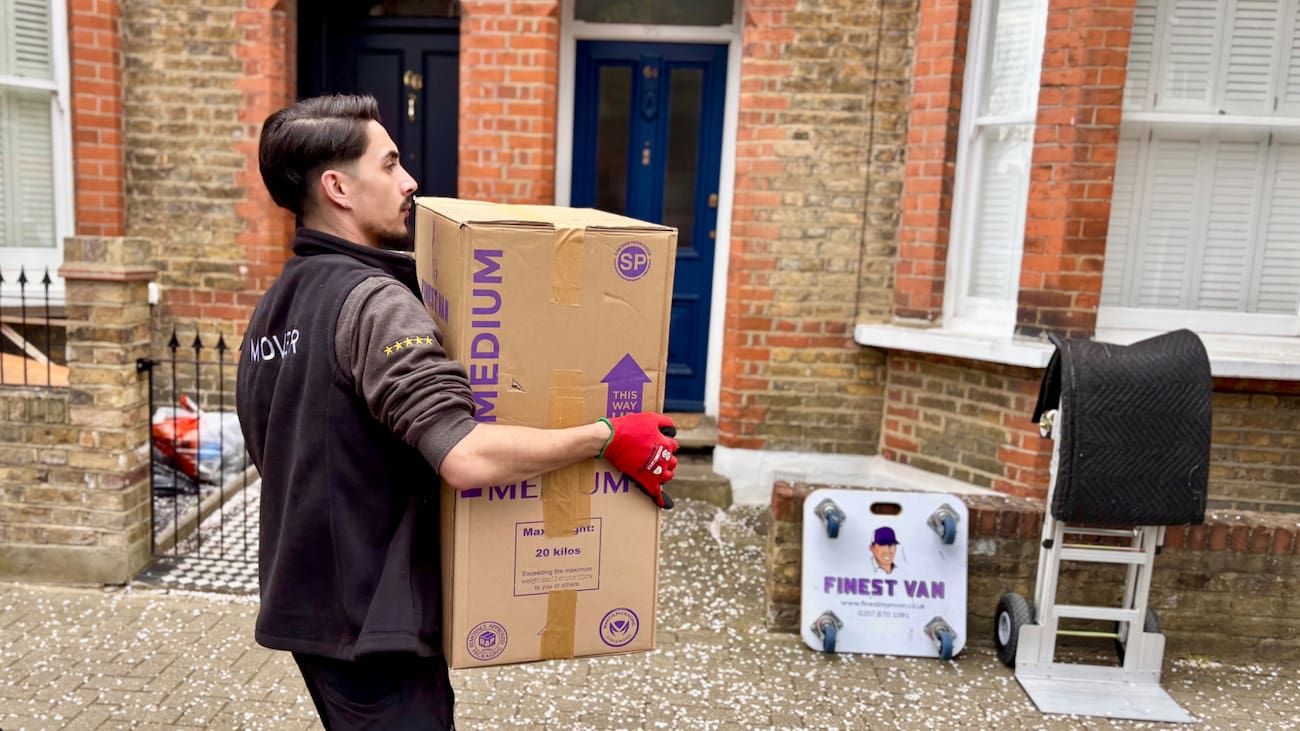
Book removals, packing services, and any temporary storage if necessary. Finest Van’s team can handle all these tasks across London. If you’re in the south, see more details about why we are South London removal experts.

Move-in to application day:
Ensure bills, council tax, and residency evidence are fully updated. If this info isn’t accurate, notify the council promptly if anything changes. Early preparation reduces stress. It also means you submit a strong, compliant application when you plan a move for a school place.
Renting as a Bridge Strategy (and How to Do it Right)
Will buying not be complete in time? In this case, renting for school catchment areas can be a smart strategy to secure the place you desire. Councils accept renting as long as it’s genuine, usually requiring a minimum tenancy period of 6-12 months. Avoid short lets. School admissions are unlikely during council verification.
You’ll need to provide clear tenancy evidence, such as the signed agreement, council tax bill, and proof you’ve left your previous address. This guarantees you meet the standard for a permanent residence while keeping your application both lawful and credible.
Evidence Checklist: Documents You’ll Likely Need
The good news: most boroughs request similar school admissions documents. The bad news: you need to remember all these documents when applying. Here’s a quick proof of address checklist:
- Signed tenancy agreement or property ownership paperwork
- Exchange or completion letter if buying
- Most recent council tax bill
- Utility bill (gas, electric, water) dated within 3 months
- Proof of leaving your old address
- Any additional documents requested by the council’s admissions team
Always confirm specific requirements with your specific local authority. This is because some London boroughs request additional verification documents depending on oversubscription levels and demand.
Aligning moving logistics with school start dates
When moving with children in London, timing is everything. Aim to move at least a few weeks before term. Along with giving you time to update paperwork and organise uniforms, it allows your family to settle. Another tip is to pack school essentials, such as uniforms, shoes, stationery, and devices separately so they’re accessible the moment you arrive.
Have your moving dates shifted? Temporary storage while moving can keep belongings secure until you’re ready. Finest Van offers arranged storage across London for added convenience. Other additional services include dismantling and reassembly, as well as supplying professional packing materials. With the right approach and support through insured moving services and family removals, your transition into a new school community will be smooth.
For general moving advice, see our guide about Avoiding Move-In Day Mistakes.
Moving Day Game-Plan for Families (Checklist)
Being prepared is always imperative when making the move to a new home. Here’s your quick moving day checklist families can rely on:
- Important documents and application papers
- Uniforms, bags, stationery, lunch boxes
- Chargers and devices
- Bedding and nighttime comfort items
- Medicines and first aid kit
- Snacks and water
- Cleaning supplies
- Toys and calming items for younger children
Putting together an essentials box is only the start. Booking insured removals and professional packing support and secure storage is recommended for an efficient, relaxed move. Finest Van’s man and van London teams offer secure packing and arranged storage to protect your belongings.
Choose a trusted London mover
Selecting the best London removals for families, there are certain aspects you must prioritise. Reliability and clear communication are important features of any removal company, as are insured services. Seek companies that boast verified reviews and transparent pricing. They should also have the flexibility to work around school application deadlines.
In comparison, it’s important you always avoid unverified man and van London listings. The reasons are simple: they often lack in customer service, insurance, and clear documentation – key when moving for a school place.
Finest Van offers friendly, fully insured services that are backed by thousands of reviews from happy customers. These services include packing, house removals, and arranged storage across London and the UK. Whether you require national removals when journeying across the country to the capital or flexible moving arrangements for a sudden move, we are a company you can trust. For families south of the river, explore our South London removal experts page for evidence of our work.
With an expert, reputable team, moving for the right school catchment becomes far less stressful with Finest Van’s support.
Book My Move With Finest Van