


Business Storage in London: A 2026 Guide for SMEs
Running out of room at work? Business storage gives a London company secure space for furniture, equipment, stock and archive boxes without taking on a bigger lease. The two main options are self-storage units you visit yourself and storage with collection, where a removals team packs, moves and returns your items for you.
The right choice depends on how often you need access, how much you are storing and who will do the lifting. This Finest Van guide compares the options, explains what affects the cost, lists what you cannot store and sets out seven ways London SMEs use storage day to day.
 Last updated: 13 November 2026
 Read time: 9 min

Business Storage at a Glance
Business storage is rented space outside your premises for items the business owns but does not need on site every day. You can use it for a few weeks during an office move or for years as overflow space.
- Short term: between leases, during a fit-out or a refurbishment
- Long term: archive boxes, spare furniture, seasonal stock or equipment
- Access: anything from daily visits to a delivery once a year
- Who moves it: your own staff, or a removals team that collects and delivers
ⓘ Storage disclaimer
Access hours, insurance requirements and the list of items a facility accepts vary by provider. Always read the facility's terms before you book.
Self-Storage or Storage with Collection for Businesses?
Choose self-storage if your team will visit often and can move items themselves. Choose storage with collection if you want a team to pack, load and deliver for you, and you only need items back occasionally.
| Business self storage | Storage with collection | |
|---|---|---|
| How it works | You rent a unit and move items in yourself | A removals team packs, collects and stores your items |
| Who does the lifting | Your staff | The removals crew |
| Access | Your own visits during opening hours | Items delivered back when you ask |
| Van and labour | You arrange them | Included in the service |
| Best for | Stock you pick from weekly, tools, frequent access | Office moves, refurbishments, archives, furniture |
What is containerised storage?
Containerised storage is a form of storage with collection. Your items are loaded into a large container, usually kept in a warehouse, and you book access or delivery in advance. It suits businesses that want the space without visiting it.
How Finest Van's commercial storage works
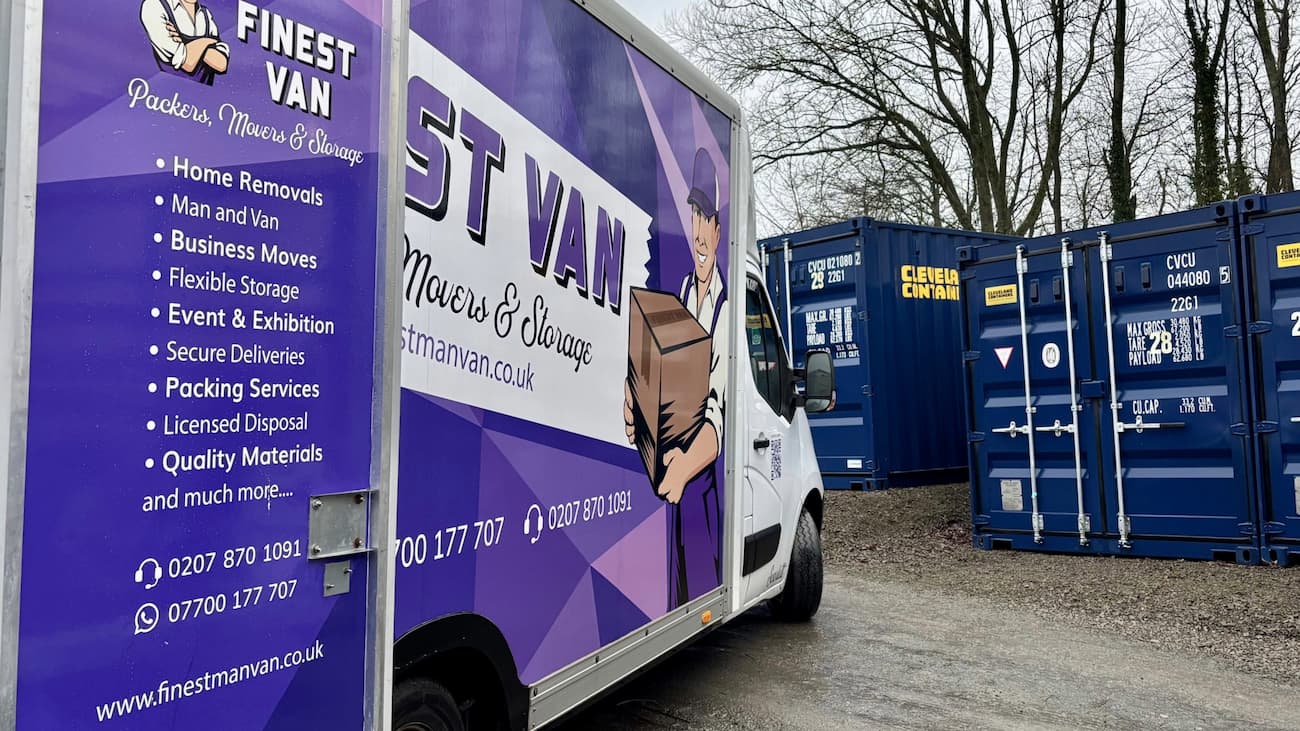
Finest Van arranges a space at a secure third-party facility with CCTV and intruder and fire alarms, then packs, loads and moves your items there. When you need them, the same team collects and delivers them to your office. See our commercial storage London page for the service details.
7 Ways London Businesses Use Storage
Most London SMEs use business storage for one of seven reasons. The common thread is the price of floor space: paying for desks or shelving to hold things nobody uses every day rarely makes sense.
1. Between offices or during a fit-out
If the old lease ends before the new office is ready, storage holds furniture and crates in the gap. It is also useful when you move in phases. Our office relocation checklist shows where storage fits in the move timeline.
2. Office furniture storage
Spare desks, chairs and meeting tables take up space you are paying for. Storing them keeps the office usable and lets you bring furniture back as the team grows.
3. Document and archive storage in London
GOV.UK says a limited company must keep its records for 6 years from the end of the last financial year they relate to, or longer in some cases. Boxed archives are a common reason to rent storage. If the files hold personal data, the ICO's guide to data security covers physical security, including controlled access to premises.
4. Stock storage for retail and e-commerce
Seasonal ranges, bulk orders and slow-moving lines can sit in storage while the shop or packing room stays clear. If you pick from stock every week, self-storage near your base usually works better than collection.
5. Hotels and hospitality refurbishments
During a refurbishment, hotels and restaurants need somewhere to keep furniture and fittings while the rooms are worked on. A collected service lets the removals team clear floors in the order the contractor needs.
6. Business equipment storage for events
Event companies store staging, signage, furniture and display stands between jobs. Ask whether the facility allows the access you need before a busy season.
7. Overflow and growth space
A growing business can store excess equipment or stock for a few months instead of signing a bigger lease too early. Our guide to short-term vs long-term storage helps you decide how long to book for.

What Affects the Cost of Business Storage?
The cost of business storage depends on how much space you need, how long you keep it and how much moving is involved. A provider should break these down in the quote, so you can see where the money goes.
| Cost factor | What changes the price | How to keep it down |
|---|---|---|
| Space | The volume your items take up | Measure first; stack boxes safely |
| Duration | Weeks, months or years, plus any minimum term | Book for the time you really need |
| Moving | Van, crew size, distance and packing | Plan what you need back before it goes in |
| Access | How often and when you need items | Match the service to your access pattern |
| Insurance | Facility cover or your own policy | Check what your business insurance already covers |
Space and volume
You pay for the space your items take up. Measuring furniture and counting boxes before you ask gives a more accurate quote.
How long you store
A few weeks during a move costs less in total than a year of archive storage, but rates and minimum terms differ between providers. Ask what notice you need to give when you finish.
Collection, delivery and packing
With storage with collection, the van, the crew size, the distance and any packing add to the cost. Every trip back to fetch items is another delivery, so plan what you will need before it goes in.
Access and insurance
Frequent or out-of-hours access can affect which facility suits you. Many facilities expect stored goods to be insured, either through their own cover or yours, so check the terms before you book.
SME storage cost checklist
- Measure or list everything you plan to store.
- Decide how often you will need access.
- Ask for collection, storage and delivery to be priced separately.
- Check the minimum term and notice period.
- Confirm who insures the goods while they are stored.
What Can You Not Store in Business Storage?
You cannot store anything dangerous, illegal or perishable in most business storage. Every facility publishes its own list, so read it before you pack.
Items that facilities commonly refuse include:
- flammable or explosive items: fuels, solvents, paints, gas cylinders
- chemicals and anything corrosive
- food and perishables that attract pests
- plants and animals
- weapons, ammunition and illegal goods
- cash and items you could not afford to lose
At work, flammable liquids and gases fall under the HSE's DSEAR guidance, which names solvents, paints, varnishes and LPG among the substances that can cause fire or explosion. If you are unsure about an item, ask the facility before it is packed.
How Should You Prepare Business Items for Storage?
Prepare items so they come back in the condition they went in: clean, dry, protected and labelled. A clear inventory matters as much as the packing.
Do
- Clean and dry furniture and equipment before storage.
- Back up and wipe or encrypt devices before they leave the office.
- Label each box with its contents and a number that matches your list.
- Wrap screens, glass and table tops.
Don't
- Store anything damp; it can lead to mould.
- Overload archive boxes; they become hard to lift and stack.
- Pack items you will need in the next month at the back.
If you want this done for you, our packing services team can pack, label and inventory everything before collection.

Is self-storage right for your business?
Self-storage units for business suit companies that visit often and have staff to move items. The Self Storage Association UK's 2026 industry report counts 3,143 self-storage stores across the UK, so there is usually a site near you. Our guide to the benefits of self storage in London explains more.
Business Storage FAQs
1. What is business storage?
Business storage is rented space outside your premises for items your company owns but does not need on site every day, such as office furniture, equipment, stock and archive boxes. You can visit a self-storage unit yourself or use storage with collection, where a removals team packs, moves and returns your items.
2. Is it cheaper to store items than rent a bigger office?
It can be, but it depends on how much you store, for how long and how often you need it back. Compare a storage quote, including collection and delivery, with the extra rent and service charge of a larger office.
3. Can I store office furniture during an office move?
Yes. Storage is useful when your old lease ends before the new office is ready, or when you move in phases. A removals team can collect the furniture, store it and deliver it to the new office once the fit-out is finished, so you do not need to hire a separate storage firm.
4. How long must a business keep its records?
GOV.UK says a limited company must keep its company and accounting records for 6 years from the end of the last financial year they relate to, or longer in some cases. Many businesses keep older boxed records in storage to free up office space, with a clear index of what each box holds.
5. What can you not keep in a business storage unit?
Facilities commonly refuse flammable or explosive items such as fuels, solvents, paints and gas cylinders, along with chemicals, food and perishables, plants and animals, weapons and illegal goods. Each facility publishes its own list in its terms, so check it before you pack anything you are unsure about.
6. Do I need insurance for business storage?
Many facilities expect stored goods to be insured. Some include cover in the storage price or sell it as an extra, while others ask you to arrange it through your business insurer. Check what is covered, the value limit and whether goods in transit to and from storage are included.
7. What is the best business storage in London for an SME?
The best business storage in London depends on how you will use it. If you visit often, a self-storage unit close to your base suits you. If you want items packed, collected and returned without staff doing the lifting, storage with collection from a removals company is usually the easier option.
The Right Business Storage Saves Space and Staff Time
Good business storage starts with how often you need your things back. Weekly access points to self-storage; occasional access, heavy items or an office move point to storage with collection. Measure what you have, check the facility's terms and keep a numbered list of every box.
Finest Van has moved and stored for London homes and businesses since 2009 and is rated 5.0 on both Google (610 reviews) and Trustpilot (1,470 reviews). If you are planning a move as well, see our office removals and storage service or our guide to removals and storage in London. For home or personal items, our main storage page has the details, and our guide to temporary storage during a business move covers the moving side.
Business Storage Made Simple.
Plan your business storage.
